Question
(i) From $B$ to $F$ in the second period and in third period from Al to Cl in increasing order of electron gain enthalpy.
(ii) Arrange elements of halogen family in decreasing order of electron gain enthalpy.
Answer

(i) In second period the arrangement electron gain enthalpy of B to F is as : $N < B < C < O < F$.
In third period the sequence of electron gain enthalpy from Al to Cl : $Al < P < Si < S < Cl$.
(ii) The order of electron gain enthalpy of elements of halogen family: $Cl > F > Br > I$.

Need a full question paper?

Generate a complete, print-ready paper with questions like this in minutes — across 16+ boards, with answer keys.

Start Generating Free

Similar questions

When 6.488 gm lead is treated with 1.002 gm oxygen $PbO _2$ is formed. It can form by heating $Pb \left( NO _3\right)_2$ also, in which percentage of oxygen is $13.38 \%$. Prove that it follows law of definite proportion.
Draw all polygon formula for the molecular formula $\text{C}_5\text{H}_{10}$.
Give one point to differentiate the following thermodynamic terms:
  1. Extensive properties and intensive properties.
  2. Isothermal process and isobaric process.
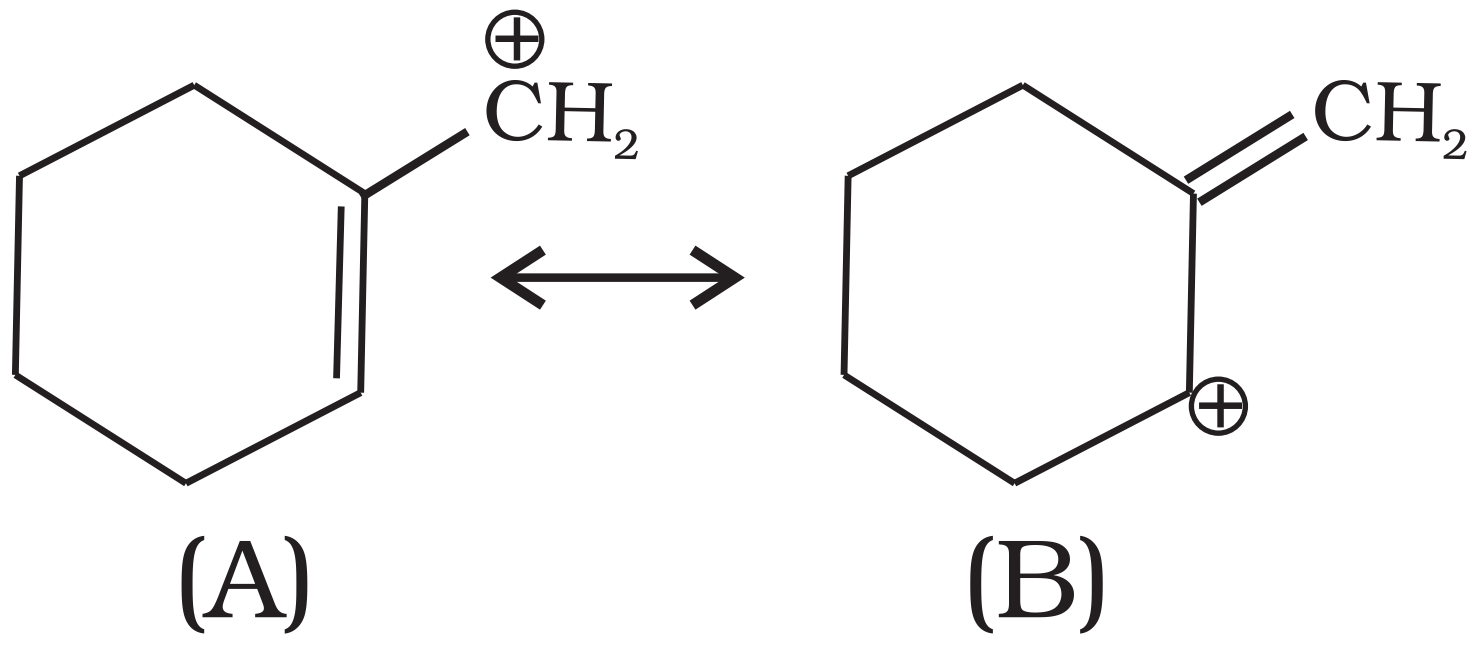
“Stability of carbocations depends upon the electron releasing inductive effect of groups adjacent to positively charged carbon atom involvement of neighbouring groups in hyperconjugation and resonance.”
Which of the following ions is more stable? Use resonance to explain your answer.
The first $\left(\mathrm{IE}_1\right)$ and second $\left(\mathrm{IE}_2\right)$ ionisation energies $(\mathrm{kJ} / \mathrm{mol})$ of a new element designated by Roman numerals are shown below:
 
$\text{IE}_1$ $\text{IE}_2$
I
2372
5251
II
520
7300
III
900
1760
IV
1680
3380
Which of these elements is likely to be (a) a reactive metal, (b) a reactive non metal, (c) a noble gas, and (d) a metal that forms a binary halide of the formula, $\mathrm{AX}_2$?
Ozone gas is heavier than air. Why does ozone layer not settle down near the earth?
Expansion of a gas in vacuum is called free expansion. Calculate the work done and the change in internal energy when 1litre of ideal gas expands isothermally into vacuum until its total volume is 5litre?
6.8 gm NaOH is dissolved in water to prepare
2 litre solution, then calculate pH of solution.
A metal is higher than a particular metal in electrochemical series. Will the metal be stronger reducing agent or weaker reducing agent?
Why $PCl _5$ exist and $NCl _5$ do not?