(i) Immunity : The body's resistance to disease is called immunity.
(ii) Differences between Active Immunity and Passive Immunity : | S.No. | Active Immunity | Passive Immunity |
| 1 | When the host encounters antigens, antibodies are produced in the body. Antigens can be in the form of living or dead microbes or other proteins. This type of immunity is called active immunity. | When ready-made antibodies are given directly to the body to protect the body, it is called passive immunity. |
| 2 | Active immunity is slow. | Whereas passive immunity is intensified. |
| 3 | It takes time to show its full effective response. | It doesn't take time to show its full impressive response. |
| 4 | It works throughout life. Example : Immunity against smallpox disease in humans. | Its effect lasts for some time. Example : immunity in humans by vaccination against snake venom, tetanus and rabies. |
(iii) Passive Immunity : Some to prevent diseases, suitable antibodies are prepared in the laboratory and injected into the body even before the possibility of disease. These remain active in the body for some time. If in the meantime the related germs or antigens reach the body, then these antibodies destroy them. This is called passive immunity of the body. This method is useful in providing immunity against tetanus, polio and hepatitis.
Antibodies are passed from the mother's blood circulation to the fetus through the ovary or placenta. The newborn baby gets passive immunity through mother's milk. It contains IgA antibodies. Colstrum, a milk-like substance, is given to the child for the first time after birth because IgA antibodies are present in abundance in it. It provides immune protection to the baby against infection by germs of any disease. Thus passive immunity is acquired immunity.
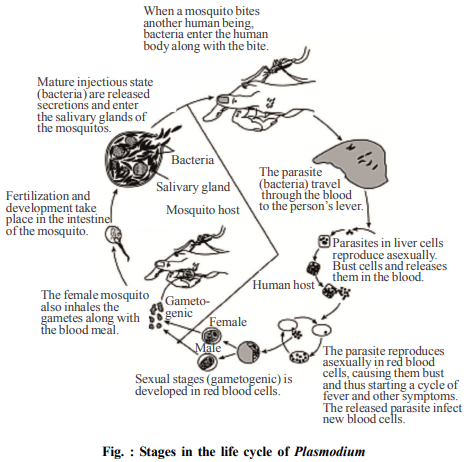
(iv) Labelled diagram of the stages of life cycle of Plasmodium in mosquito host :