MCQ
Identify the correct order of solubility in aqueous medium.
- A$Na_2S > CuS > ZnS$
- ✓$Na_2S > ZnS > CuS$
- C$CuS > ZnS > Na_2S$
- D$ZnS > Na_2S > CuS$
According to Fajans' rule,
Size of the cation increases the ionic character also increases.
lonic character oc size of cation (if anion is same)
The order of size of cation is
$N a^{+}>Z n^{2+}>C u^{2+}$
$\therefore$ The order of ionic character and hence, of solubility in water is as
$N a_{2} S>Z n S>C u S$
Generate a complete, print-ready paper with questions like this in minutes — across 16+ boards, with answer keys.

$CaS{O_4}.5{H_2}{O_{(s)}}\, \rightleftharpoons \,CaS{O_4}.3{H_2}{O_{(s)}} + 2{H_2}{O_{(g)}}$ is equal to
image$\mathop {\xrightarrow{{NaN{O_2}}}}\limits_{HCl} A\,\,\xrightarrow{{CuCN}}B\,\,\mathop {\xrightarrow{{{H_2}}}}\limits_{Ni} C\,\,\xrightarrow{{HN{O_2}}}D$
$(i)$ $X + Y \rightleftharpoons M$ very rapid equilibrium
$(ii)$ $M + Z \to P$ slow
$(iii)$ $O + Y \to N$ very fast
What is the rate law for this reaction
Figure $\xrightarrow[{(ii)\,\,NaB{D_4}}]{{(i)\,\,Hg{{(OAc)}_2}\,{H_2}O}}Q$
Figure $\xrightarrow[{(ii)\,\,{H_2}{O_2}\,/\,O{H^ - }}]{{(i)\,\,B{D_6}\,,\,THF}}R$
Products $P, Q$ and $R$ are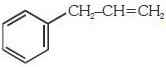
$A : 1s^2\, 2s^2\, 2p^6$
$B : 1s^2\, 2s^2\, 2p^6\, 3s^2\, 3p^3$
$C : 1s^2\, 2s^2\, 2p^6\, 3s^2\, 3p^5$