Question
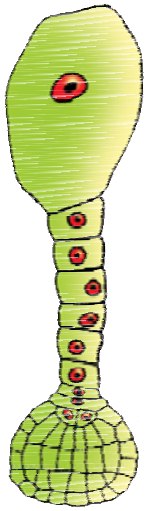
Identify the figure given alongside.

Answer

It is a globular embryo of a dicot plant.

Need a full question paper?

Generate a complete, print-ready paper with questions like this in minutes — across 16+ boards, with answer keys.
Start Generating Free

Similar questions

  1. Differentiate between analogous and homologous structures.
  2. Select and write analogous structures from the list given below:
  1. Wings of butterfly and birds.
  2. Vertebrate hearts.
  3. Tendrils of bougainvillea and cucurbita.
  4. Tubers of sweet potato and potato.
Name the polymerase which is generally used in PCR? What is the source of this enzyme?
Define the term addiction. Name some drugs which are normally used as medicines but are often abused.
Write a Note about: STIs
Briefly classify the extinction processes.
Given below is a list of six micro-organisms. State their usefulness to humans.
  1. Nucleopolyhedrovirus.
  2. Saccharomyces cerevisiae.
  3. Monascus purpureus.
  4. Trichoderma polysporum.
  5. Penicillium notatum.
  6. Propionibacterium sharmanii.
Ignoring our traditional knowledge can we prove costly in the area of biological patenting. Justify.
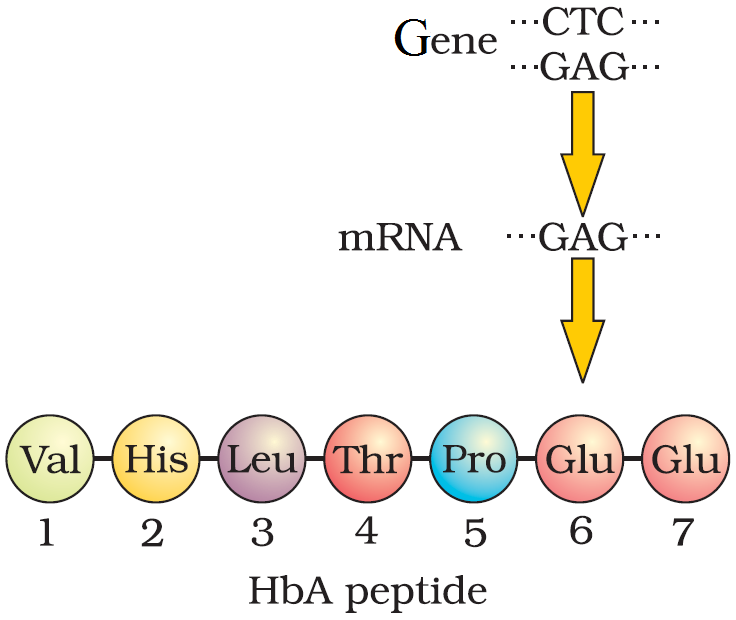
Given below is the representation of amino acid composition of the relevant translated portion of B-chain of haemoglobin, related to the shape of human red blood cells.
  1. Is this representation indicating a normal human or a sufferer from certain related genetic disease? Give reason in support of your answer.
  2. What difference would be noticed in the phenotype of the normal and the sufferer related to this gene?
  3. Who are likely to suffer more from the defect related to the gene representedthe males, the females or both males and females equally? And why?
  1. What are meiocytes?
  2. If the chromosome number in meiocytes of human beings, housefly, potato, apple, dog and maize are 46, 12, 48, 34,78 and 20, respectively. What will be the chromosome numbers in gametes of these species?
What background information did Watson and Crick have made available for developing a model of DNA? What was their contribution?