MCQ
Identify the physical quantity that cannot be measured using spherometer :
  • A
    ) Radius of curvature of concave surface
  • Specific rotation of liquids
  • C
    Thickness of thin plates
  • D
    Radius of curvature of convex surface

Answer

Correct option: B.
Specific rotation of liquids
(B) Spherometer can be used to measure curvature of surface.

Need a full question paper?

Generate a complete, print-ready paper with questions like this in minutes — across 16+ boards, with answer keys.
Start Generating Free

Similar questions

If the projection of $2 \hat{i}+4 \hat{j}-2 \hat{k}$ on $\hat{i}+2 \hat{j}+\alpha \hat{k}$ is zero. Then, the value of $\alpha$ will be.
What will be the input of $A$ and $B$ for the Boolean expression $\overline {(A + B)} \, \cdot \,\overline {(A \cdot B)} = 1$
The angular velocity and the amplitude of a simple pendulum is $'\omega '$ and $'A'$ respectively. At a displacement $x$ from the mean position its kinetic energy is $'T'$ and potnetial energy is $'V'$. Then the ratio $\frac{V}{T}$ is
$14 \times {10^{15}}$ electrons reach the anode per second. If the power consumed is $448$  milliwatts, then the plate (anode) voltage is....$V$
If the temperature increases, then what happens to the frequency of the sound produced by the organ pipe
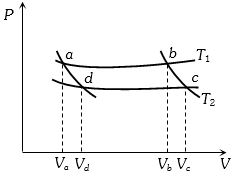
In the following $P-V$ diagram two adiabatics cut two isothermals at temperatures $T_1$ and $T_2$ (fig.). The value of $\frac{{{V_a}}}{{{V_d}}}$ will be
If identical charges $( - q)$ are placed at each corner of a cube of side $b$, then electric potential energy of charge $( + q)$ which is placed at centre of the cube will be
A car starts from rest and moves with uniform acceleration $'a'$ on a straight road from time $t = 0$ to $t = T$ . After that, a constant deceleration $'a'$ brings it to rest. In this process the average speed of the car is
An electric field is given by $(6 \hat{i}+5 \hat{j}+3 \hat{k}) \ N / C$.

The electric flux through a surface area $30 \hat{\mathrm{i}}\; m^2$ lying in $YZ-$plane (in SI unit) is

A laser beam is incident on a flat/plane mirror at some angle and results in a reflected beam. The mirror is now rotated by an angle $\delta$ while the direction of incident laser beam is kept the same. The angle between the new reflected beam and the reflected beam before the mirror was rotated is