MCQ
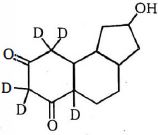
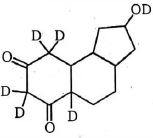
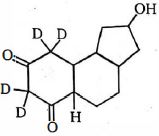
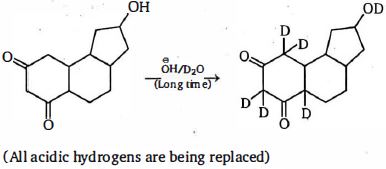
Identify the product formed in the above reaction: 
  • A


  • C

  • D
    None of these

Answer

Correct option: B.

b

Need a full question paper?

Generate a complete, print-ready paper with questions like this in minutes — across 16+ boards, with answer keys.

Start Generating Free

Similar questions

In young’s double slit experiment with a source of light of wavelength $6320Å$, the first maxima will occur when
Water coming out of a horizontal tube at a speed ? strikes normally a vertically wall close to the mouth of the tube and falls down vertically after impact. When the speed of water is increased to $2v$ .
Given below are two statements :

Statement $I$ : The law of gravitation holds good for any pair of bodies in the universe.

Statement $II$ : The weight of any person becomes zero when the person is at the centre of the earth. In the light of the above statements, choose the correct answer from the options given below.

The focal lengths of the objective and the eye-piece of a compound microscope are $2.0\, cm$ and $3.0 \,cm$ respectively. The distance between the objective and the eye-piece is $15.0 \,cm$. The final image formed by the eye-piece is at infinity. The two lenses are thin. The distances in $cm$ of the object and the image produced by the objective measured from the objective lens are respectively
A photon is emitted in transition from $n =4$ to $n =1$ level in hydrogen atom. The corresponding wavelength for this transition is $.........\,nm$ $\text { (given, } h =4 \times 10^{-15} eVs \text { ) : }$
Consider the quantities, pressure, power, energy, impulse, gravitational potential, electrical charge, temperature, area. Out of these, the only vector quantities are
If two protons are moving with speed $v=4.5 \times 10^{5} \,m / s$ parallel to each other then the ratio of electrostatic and magnetic force between them
The initial velocity of a particle moving along $x$-axis is $u$ (at $t=0$ and $x=0$ ) and its acceleration $a$ is given by $a=k x$. Which of the following equation is correct between its velocity $(v)$ and position $(x)$ ?
At what temperature will the $rms$ speed of oxygen molecules become just sufficient for escaping from the Earth's atmosphere $?$ (Given: Mass of oxygen molecule $(m)= 2.76 \times 10^{-26}\,kg$ Boltzmann's constant $k_B= 1.38 \times 10^{-23}\,\, JK^{-1}$)
The diagram shows a small bead of mass $m$ carrying charge $q$. The bead can freely move on the smooth fixed ring placed on a smooth horizontal plane. In the same plane a charge $+Q$ has also been fixed as shown. The potential atthe point $P$ due to $+Q$ is $V$. The velocity with which the bead should projected from the point $P$ so that it can complete a circle should be greater than