MCQ
Identify the quantity which changes when a charged particle moves through a magnetic field?
- AEnergy
- BMass
- CSpeed
- DDirection of motion
Explanation:
When a charged particle moves through a magnetic field it suffers a change in its direction of motion.
Generate a complete, print-ready paper with questions like this in minutes — across 16+ boards, with answer keys.
A nuclear reaction given by  represents
|
(a) g-decay |
(b) Fusion |
(c) Fission |
(d) b-decay |
A fish is a little away below the surface of a lake. If the critical angle is 49°, then the fish could see things above the water surface within an angular range of θ° where
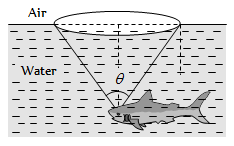
|
(a) θ = 49° |
(b) θ = 90° |
(c) θ = 98° |
(d) θ = 24 |
If in a nuclear fusion process the masses of the fusing nuclei be  and
and  and the mass of the resultant nucleus be
  , then
(a) 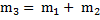
|
(b) 
|
(c) 
|
(d) 
|
A hollow double concave lens is made of very thin transparent material. It can be filled with air or either of two liquids L1 and L2 having refractive indices n1 and n2 respectively (n2 > n1 > 1). The lens will diverge a parallel beam of light if it is filled with
|
(a) Air and placed in air |
(b) Air and immersed in L1 |
|
(c) L1 and immersed in L2 |
(d) L2 and immersed in L1 |
When the speed of electrons increases, then the value of its specific charge
|
(a) Increases |
|
(b) Decreases |
|
(c) Remains unchanged |
|
(d) Increases upto some velocity and then begins to decrease |
A thermo couple uses Bismuth and Tellurium as the dissimilar metals. The sensitivity of bismuth is -72μV/℃ and that of the tellurium is 500μV/℃. If the difference between hot and cold junction is 100℃ then the maximum output will be
|
(a) 50 mV |
(b) 7.2 mV |
(c) 42.8 mV |
(d) 57.2 mV |
