Question

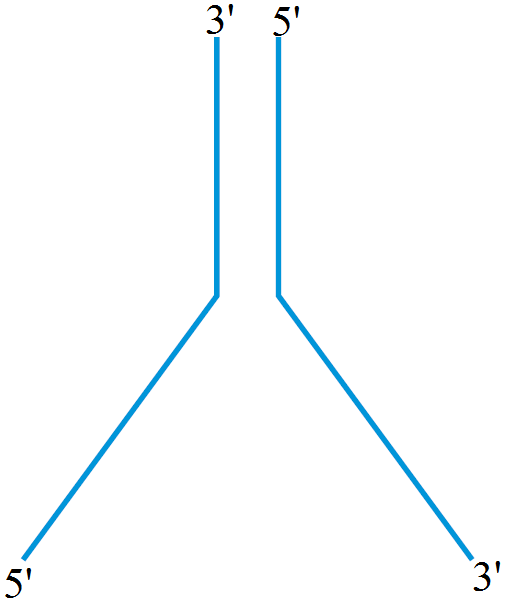
  1. Identify the structure shown above.
  2. Redraw the structure as a replicating fork and label the parts.
  3. Write the source of energy for this replication and list the enzymes involved in this process.
  4. Mention the difference in the synthesis based on the polarity of the two template strands.
Answer

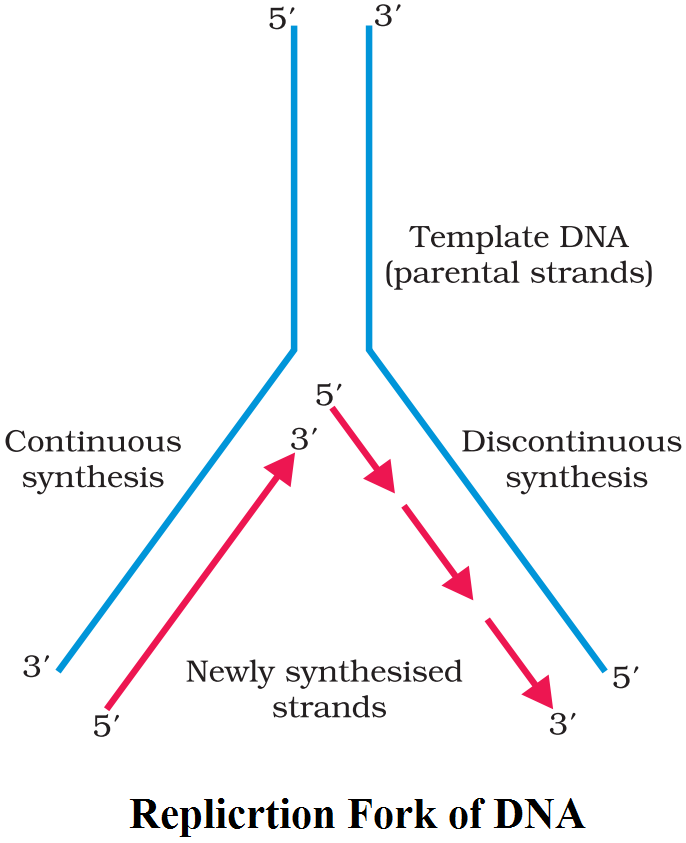
  1. It represents the parental or template DNA strands, showing the replication fork.
  2.  
  1. The deoxyribonucleoside triphosphates provide energy.
  2. DNA dependent DNA polymerase and DNA ligases are the enzymes involved;
  1.  
  1. On the template strand with 3' → 5' polarity, DNA synthesis is continuous, in the 5' → 3' direction.
  2. On the template strand with 5' → 3' polarity, DNA synthesis is discontinuous; DNA strand is synthesised as short segments, also in the 5' → 3' direction and the discontinuously synthesised segments become joined by DNA ligase.

Need a full question paper?

Generate a complete, print-ready paper with questions like this in minutes — across 16+ boards, with answer keys.

Start Generating Free

Similar questions

Write the differences in following-
(a) Humoral Immunity and cell mediated Immunity.
(b) Innate Immunity and acquired Immunity
(c) Antigens and antibody
(d) T-lymphocytes and B-lymphocytes
Which element is responsible for causing soil salinity? At what concentration does the soil become saline?
  1. List the three different allelic forms of gene ‘I’ in humans. Explain the different phenotypic expressions, controlled by these three forms.
  2.  A woman with blood group'A'marries a man with blood group 'O'. Discuss the possibilities of the inheritance of the blood groups in the following, starting with 'yes' or 'no' for each:
  1. They produce children with blood group ‘A’ only.
  2. They produce children, some with 'O' blood group and some with 'A' blood group.
Explain : Restriction Enzymes and DNA
Match the sex-chromosome complements in Column I with the male/ female organisms in Column II.
S.No
Column I
S.No
Column II
A.
XO
1.
Human male
B.
XX
2.
Male bird
C.
XY
3.
Male grasshopper
D.
ZZ
4.
Female Drosophila
 
 
5.
Female bird
Answer the following questions:
Where is morula formed in humans? Explain the process of its development from zygote.
Trace the events taking place in a flower from the time of pollen grain entry up to the completion of fertilisation.
Describe the structure of DNA.###Describe the DNA proposed by Watson and Crick.
Suggest some methods to assist infertile couples to have children.
Differentiate between male heterogamety and female heterogamety with the help of an example of each.