Question
If A = [1] , then A is:
  1. Zero matrix
  2. SIngular matrix
  3. Non - singular matrix
  4. Data insufficient

Answer

  1. Non - singular matrix

Solution:

$\text{A} = \big[1\big] $ is an identity matrix with order $1\times1.|\text{A}|\neq0$

So A is nonsingular.

Need a full question paper?

Generate a complete, print-ready paper with questions like this in minutes — across 16+ boards, with answer keys.

Start Generating Free

Similar questions

Evaluate: $\int \frac{\left(a^x+b^x\right)^2}{a^x b^x} d x$
The area bounded by the lines y = |x – 2|, x = 1, x = 3 and the x- axis is:
  1. 1 sq. unit
  2. 2 sq. units
  3. 3 sq. units
  4. 4 sq. units
$\int {\frac{{dx}}{{{{({a^2} + {x^2})}^{3/2}}}}} $ is equal to
For the function

$f(x)=x \cos \frac{1}{x}, \quad x \geq 1,$

$(A)$ for at least one $x$ in the interval $[1, \infty), f(x+2)-f(x)<2$

$(B)$ $\lim _{x \rightarrow \infty} f^{\prime}(x)=1$

$(C)$ for all $x$ in the interval $[1, \infty), f(x+2)-f(x)>2$

$(D)$ $f^{\prime}(x)$ is strictly decreasing in the interval $[1, \infty)$
If $\text{f(x)}=\begin{cases}\frac{36^\text{x}-9^\text{x}-4\text{x}+1}{\sqrt{2}-\sqrt{1+\cos\text{x}}},&\text{x}\neq0\\\text{k},&\text{x}=0\end{cases}$ is continuous at x = 0, these k equals.
  1. $16\sqrt{2}\log2\log3$
  2. $16\sqrt{2}\text{ in }6$
  3. $16\sqrt{2}\text{ in }6\text{ in }3$
  4. None of these
Magnitudes of vectors $ \vec a,\vec b,\vec c$ are $3,4,5 $ respectively. If $\vec a$ and $ \vec b+\vec c, \vec b$ and $\vec c+ \vec a,\vec c $ and $\vec a + \vec b$ are mutually perpendicular, then magnitude of $|\vec a + \vec b + \vec c|$
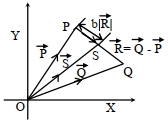
Three vectors $\vec{P}, \vec{Q}$ and $\vec{R}$ are shown in the figure. Let $S$ be any point on the vector $\vec{R}$. The distance between the point $P$ ad $S$ is $b|\vec{R}|$. The general relation among vectors $\vec{P}, \vec{Q}$ and $\vec{S}$ is
If $\theta = {\sin ^{ - 1}}x + {\cos ^{ - 1}}x - {\tan ^{ - 1}}x,x \ge 0$, then the smallest interval in which $\theta $ lies is given by
The function ${x^x}$ is increasing, when
Statement $I:$ The equation ${({\sin ^{ - 1}}\,x)^3} + {({\cos ^{ - 1}}\,x)^3} - a{\pi ^3} = 0$ has a solution for all $a \ge \frac{1}{{32}}.$

Statement $II:$  For any $x \in R ,$ ${\sin ^{ - 1}}\,x + {\cos ^{ - 1}}\,x = \frac{\pi }{2}$ and $0 \le {\left( {{{\sin }^{ - 1}}\,x - \frac{\pi }{4}} \right)^2} \le \frac{{9{\pi ^2}}}{{16}}$