Question
If $a - b = 0.9$ and $ab = 0.36;$ find:$(i) \ a + b;(ii) \ a^2- b^2.$

Answer

$(i)$ We know that,
$(a-b)^2=a^2-2 a b+b^2$ and $(a+b)^2=a^2+2 a b+b^2$
Rewrite the above equation, we have
$(a+b)^2 =a^2+b^2-2 a b+4 a b$
$ =(a-b)^2+4 a b$
Given that $a-b=0.9 ; a b=0.36$
Substitute the values of $(a-b)$ and $(ab)$
in equation $(1), $we have
$(a+b)^2 =(0.9)^2+4(0.36)$
$ =0.81+1.44=2.25$
$\Rightarrow a+b = \pm \sqrt{2.25}$
$\Rightarrow a+b = \pm 1.5$
$(ii)$ We know that,
$a^2-b^2=(a+b)(a-b)$
From equation $(2)$ we have,
$a+b= \pm 1.5$
Thus equation $(3)$ becomes,
$a^2-b^2=( \pm 1.5)(0.9) [$given $a-b=0.9]$
$\Rightarrow a^2-b^2= \pm 1.35 $

Need a full question paper?

Generate a complete, print-ready paper with questions like this in minutes — across 16+ boards, with answer keys.
Start Generating Free

Similar questions

If $A = B = 45^\circ ,$ verify that $\sin (A - B) = \sin A .\cos B - \cos A.\sin B$
Solve the following systems of equations by using the method of cross multiplication:
ax + by = (a - b), bx - ay = (a + b)
Use graph paper for this question. Take $2 \ cm = 1$ unit on both the axes.$(i)$ Draw the graphs of $x + y + 3 = 0$ and $3x - 2y + 4 = 0.$ Plot only three points per line.$(ii)$ Write down the coordinates of the point of intersection of the lines.$(iii)$ Measure and record the distance of the point of intersection of the lines from the origin in $\ cm.$
Anuj and Rajesh each lent the same sum of money for $2$ years at $8\%$ simple interest and compound interest respectively. Rajesh received $Rs. 64$ more than Anuj . Find the money lent by each and interest received.
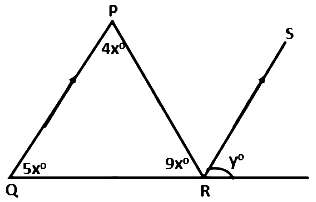
In the figure given below, if $RS$ is parallel to $PQ$, then find the value of $\angle y.$
A closed box is made of wood $5\ mm$ thick. The external length, breadth and height of the box are $21 \ cm$, $13 \ cm$ and $11 \ cm$ respectively. Find the volume of the wood used in making the box.
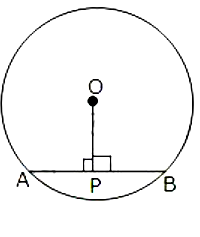
The following figure shows a circle with center $O$.

If $O P$ is perpendicular to $A B$, prove that $A P=B P$.

 
If $\frac{a}{b}=\frac{b}{c}$, prove that $(a+b+c)(a-b+c)=\left(a^2+b^2+c^2\right)$.
Solve the following pair of linear $($Simultaneous $)$ equation using method of elimination by substitution$\frac{2 x+1}{7}+\frac{5 y-3}{3}=12,\frac{3 x+2}{2}-\frac{4 y+3}{9}=13$
$A (- 2, 2), B(8, 2)$ and $C(4, - 4)$ are the vertices of a parallelogram $\text{ABCD}$. By plotting the given points on a graph paper; find the co$-$ordinates of the fourth vertex $D$.Also, form the sazmegraph,state the co$-$ordinates of the mid$-$points of the sides $AB$ and $CD.$