Question
If $a -\frac{1}{ a }=10$; find $a +\frac{1}{ a }$

Answer

$a-\frac{1}{a}=10 $
$\left(a-\frac{1}{a}\right)^2 $
$=a^2+\frac{1}{a^2}-2(a)\left(\frac{1}{a}\right) $
$\Rightarrow(10)^2 $
$=a^2+\frac{1}{a^2}-2 $
$=a^2+\frac{1}{a^2} $
$=102$
Now $_t\left( a +\frac{1}{ a ^2}\right)$
$=a^2+\frac{1}{a^2}+2(a)\left(\frac{1}{a}\right) $
$=102+2 $
$=104 $
$=a^2-\frac{1}{a^2} $
$=\sqrt{104} $
$= \pm 2 \sqrt{26} .$

Need a full question paper?

Generate a complete, print-ready paper with questions like this in minutes — across 16+ boards, with answer keys.
Start Generating Free

Similar questions

The ratio between the number of sides of two regular polygon is $3 : 4$ and the ratio between their interior angles is $2 : 3$. Find the number of sides of each polygon.
Construct a quadrilateral ABCD in which $AB =4.5 cm, BC =5.2 cm, CD =5 cm$, $DA =4.7 cm$ and $\angle ABC =75^{\circ}$.
The length of a room exceeds its breadth by 3 metres. If the length is increased by 3 m and breadth is decreased by 2 metres, the area remains the same. Find the length and breadth of the room.
In trapezium $\text{ABCD, AB}$ is parallel to $DC; P$ and $Q$ are the mid$-$points of $AD$ and $BC$ respectively. $BP$ produced meets $CD$ produced at point $E.$
Prove that:
  1. Point $P$ bisects $BE,$
  2. $PQ$ is parallel to $AB.$
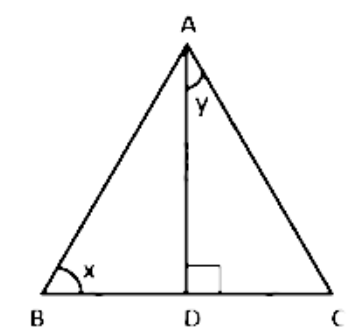
In the given figure, $AD$ is the median on $BC$ from $A.$ If $AD = 8\ cm$ and $BC = 12\ cm,$ find the value of $\cos y$
Image
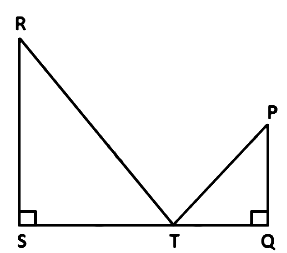
In the given figure, $P Q=\frac{R S}{3}=8 \ cm , 3 S T=4 Q T=48 \ cm$. SHow that $\angle R T P=90^{\circ}$.
Calculate the difference between the simple interest and the compound interest on $Rs. 4,000$ in $2$ years at $8\ \%\ $ per annum compounded yearly.
The square on the diagonal of a cube has an area of $441 \ cm^2. $Find the length of the side and total surface area of the cube.
In $\triangle ABC, BE$ and $CF$ are medians. $P$ is a point on $BE$ produced such that $BE = EP$ and $Q$ is a point on $CF$ produced such that $CF = FQ$. Prove that : $A$ is the mid $-$ point of $PQ$.
The internal length, breadth, and height of a box are $30 \ cm, 24 \ cm$, and $15 \ cm$. Find the largest number of cubes which can be placed inside this box if the edge of each cube is$;(i) 3 \ cm ;(ii) 4 \ cm ;(iii) 5 \ cm$