Question
If a real valued function $f(x)$ is finitely derivable at any point of its domain, it is necessarily continuous at that point. But its converse need not be true.
For example, every polynomial, constant function are both continuous as well as differentiable and inverse trigonometric functions are continuous and differentiable in its domains etc.
Based on the above information, answer the following questions.
  1. If $\text{f}(\text{x})=\begin{cases}\text{x},\text{for x}\leq0\\0,\text{for x}>0\end{cases},$ then at $x = 0$
  1. $f(x)$ is differentiable and continuous.
  2. $f(x)$ is neither continuous nor differentiable.
  3. $f(x)$ is continuous but not differentiable.
  4. None of these.
  1. If $\text{f}(\text{x})=|\text{x}-1|,\text{x }\in\text{ R},$ then at $x = 1$
  1. $f(x)$ is not continuous.
  2. $f(x)$ is continuous but not differentiable.
  3. $f(x)$ is continuous and differentiable.
  4. None of these.
  1. $f(x) = x^3$ is:
  1. Continuous but not differentiable at $x = 3$
  2. Continuous but not differentiable at $x = 3$
  3. Neither continuous nor differentiable at $x = 3$
  4. None of these.
  1. If $\text{f}(\text{x})=[\sin\text{x}],$ then which of the following is true$?$
  1. $f(x)$ is continuous and differentiable at $x = 0.$
  2. $f(x)$ is discontinuous at $x = 0.$
  3. $f(x)$ is continuous at $x = 0$ but not differentiable.
  4. $f(x)$ is differentiable but not continuous at $\text{x}=\frac{\pi}{2}.$
  1. If $\text{f}(\text{x})=\sin^{-1}\text{x},-1\leq\text{x}\leq1,$ then:
  1. $f(x)$ is both continuous and differentiable.
  2. $f(x)$ is neither continuous nor differentiable.
  3. $f(x)$ is continuous but not differentiable.
  4. None of these.

Answer

  1. (c) $f(x)$ is continuous but not differentiable.
  1. (b) $f(x)$ is continuous but not differentiable.
  1. (b) Continuous but not differentiable at $x = 3$
  1. (b) $f(x)$ is discontinuous at $x = 0.$
  1. (a) $f(x)$ is both continuous and differentiable.

Need a full question paper?

Generate a complete, print-ready paper with questions like this in minutes — across 16+ boards, with answer keys.

Start Generating Free

Similar questions

Megha wants to prepare a handmade gift box for her friend's birthday at home. For making lower part of box, she takes a square piece of cardboard of side $20$cm.

Based on the above information, answer the following questions.
  1. If $x$ cm be the length of each side of the square cardboard which is to be cut off from corners of the square piece of side 20cm, then possible value of $x$ will be given by the interval.
  1. $[0, 20]$
  2. $(0, 10)$
  3. $(0, 3)$
  4. None of these
  1. Volume of the open box formed by folding up the cutting corner can be expressed as.
  1. $\text{V}=\text{x}(20-2\text{x})(20-2\text{x)}$
  2. $\text{V}=\frac{\text{x}}{2}(20+\text{x})(20-\text{x})$
  3. $\text{V}=\frac{\text{x}}{3}(20-\text{x})(20+\text{x})$
  4. $\text{V}=\text{x}(20-2\text{x})(20-\text{x)}$
  1. The values of $x$ for which $\frac{\text{dV}}{\text{dX}}=0$, are.
  1. $3, 4$
  2. $0,\frac{10}{3}$
  3. $0, 10$
  4. $10,\frac{10}{3}$
  1. Megha is interested in maximizing the volume of the box. So, what should be the side of the square to be cut off so that the volume of the box is maximum?
  1. $12$cm
  2. $8$cm
  3. $\frac{10}{3}\text{cm}$
  4. $2$cm
  1. The maximum value of the volume is.
  1. $\frac{17000}{27}\text{cm}^3$
  2. $\frac{11000}{27}\text{cm}^3$
  3. $\frac{8000}{27}\text{cm}^3$
  4. $\frac{16000}{27}\text{cm}^3$
It is known that, if the interest is compounded continuously, the principal changes at the rate equal to the product of the rate of bank interest per annum and the principal. Let $P$ denotes the principal at any time t and rate of interest be $r\%$ per annum.

Based on the above information, answer the following question.
  1. Find the value of $\frac{\text{dP}}{\text{dt}}.$
  1. $\frac{\text{Pr}}{1000}$
  2. $\frac{\text{Pr}}{100}$
  3. $\frac{\text{Pr}}{10}$
  4. $\text{Pr}$
  1. If $P_0$ be the initial principal, then find the solution of differential equation formed in given situation.
  1. $\log\Big(\frac{\text{P}}{\text{P}_0}\Big)=\frac{\text{rt}}{100}$
  2. $\log\Big(\frac{\text{P}}{\text{P}_0}\Big)=\frac{\text{rt}}{10}$
  3. $\log\Big(\frac{\text{P}}{\text{P}_0}\Big)=\text{rt}$
  4. $\log\Big(\frac{\text{P}}{\text{P}_0}\Big)=100\text{rt}$
  1. If the interest is compounded continuously at $5\%$ per annum, in how many years will $₹\ 100$ double itself?
  1. $12.728$ years
  2. $14.789$ years
  3. $13.862$ years
  4. $15.872$ years
  1. At what interest rate will $₹\ 100$ double itself in $10$ years? $(\log_\text{e}2 = 0.6931 ).$
  1. $9.66\%$
  2. $8.239\%$
  3. $7.341\%$
  4. $6.931\%$
  1. How much will $₹\ 1000$ be worth at $5\%$ interest after $10$ years? $(e^{0.5} = 1.648).$
  1. $₹\ 1648$
  2. $₹\ 1500$
  3. $₹\ 1664$
  4. $₹\ 1572$
 On her birthday, Seema decided to donate some money to the children of an orphanage home. If there were $8$ children less, everyone would have got $₹10$ more. However, if there were $16$ children more, everyone would have got $₹10$ less. Let the number of children be $\mathrm{x}$ and the amount distributed by Seema for one child be $\mathrm{y} \ ($in $₹)$.Image
$(i)$ Represent given information in matrix algebra.
$(ii)$ Find the adjoint of Matrix containing information about of number of children and amount she paid?
$(iii)$ Find the number of children who were given some money by Seema?
OR
How much amount does Seema spend in distributing the money to all the students of the Orphanage?
If an equation is of the form $\frac{\text{dy}}{\text{dx}}+\text{Py}=\text{Q},$ where P, Qare functions of x, then such equation is known as linear differential equation. Its solution is given by
$\text{y}\times\text{(I.F.)}=\int\text{Q}\times\text{(I.F.)}\text{dx}+\text{c},$ where $\text{I.F.}=\text{e}^{\int\text{pdx}}.$
Now, suppose the given equation is $(1+\sin\text{x})\frac{\text{dy}}{\text{dx}}+\text{y}\cos\text{x}+\text{x}=0.$
Based on the above information, answer the following questions.
  1. The value of P and Q respectively are:
  1. $\frac{\sin\text{x}}{1+\cos\text{x}},\ \frac{\text{x}}{1+\sin\text{x}}$
  2. $\frac{\cos\text{x}}{1+\sin\text{x}},\ \frac{\text{-x}}{1+\sin\text{x}}$
  3. $\frac{-\cos\text{x}}{1+\sin\text{x}},\ \frac{\text{x}}{1+\sin\text{x}}$
  4. $\frac{\cos\text{x}}{1+\sin\text{x}},\ \frac{\text{x}}{1+\sin\text{x}}$
  1. The value of I.F is:
  1. $1-\sin\text{x}$
  2. $\cos\text{x}$
  3. $1+\sin\text{x}$
  4. $1-\cos\text{x}$
  1. Solution of given equation is:
  1. $\text{y}(1-\sin\text{x})=\text{x+c}$
  2. $\text{y}(1+\sin\text{x})=-\text{x}^2+\text{c}$
  3. $\text{y}(1-\sin\text{x})=\frac{\text{-x}^2}{2}\text{+c}$
  4. $\text{y}(1+\sin\text{x})=\frac{\text{-x}^2}{2}\text{+c}$
  1. If y(0) = 1, then y equals
  1. $\frac{2-\text{x}^2}{2(1+\sin\text{x})}$
  2. $\frac{2+\text{x}^2}{2(1+\sin\text{x})}$
  3. $\frac{2-\text{x}^2}{2(1-\sin\text{x})}$
  4. $\frac{2+\text{x}^2}{2(1-\sin\text{x})}$
  1. Value of is $\text{y}\Big(\frac{\pi}{2}\Big)$ is:
  1. $\frac{4-\pi^2}{2}$
  2. $\frac{8-\pi^2}{16}$
  3. $\frac{8-\pi^2}{4}$
  4. $\frac{4+\pi^2}{2}$
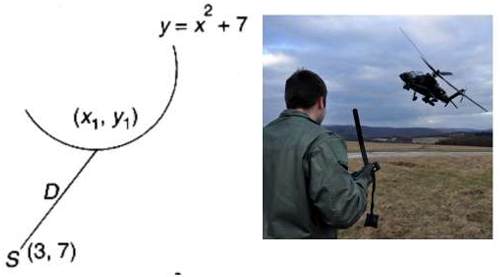
An Apache helicopter of the enemy is flying along the curve given by $y=x^2+7$. A soldier, placed at $(3,7)$ want to shoot down the helicopter when it is nearest to him.

Image

(i) If $\mathrm{P}\left(\mathrm{x}_1, \mathrm{y}_1\right)$ be the position of a helicopter on curve $\mathrm{y}=\mathrm{x}^2+7$, then find distance $\mathrm{D}$ from $\mathrm{P}$ to soldier place at $(3,7)$.

(ii) Find the critical point such that distance is minimum.

(iii) Verify by second derivative test that distance is minimum at $(1,8)$.

OR

Find the minimum distance between soldier and helicopter?

Read the following passage and answer the questions given below: In an Office three employees James, Sophia and Oliver process incoming copies of a certain form. James processes $50\%$ of the forms, Sophia processes $20\%$ and Oliver the remaining $30\%$ of the forms. James has an error rate of $0.06,$ Sophia has an error rate of $0.04$ and Oliver has an error rate of $0.03.$ Based on the above
Image
information, answer the following questions.
(i) Find the probability that Sophia processed the form and committed an error.
(ii) Find the total probability of committing an error in processing the form.
(iii) The manager of the Company wants to do a quality check. During inspection, he selects a form at random from the days output of processed form. If the form selected at random has an error, find the probability that the form is not processed by James.
OR
(iii) Let E be the event of committing an error in processing the form and let 12 ,EEand 3 Ebe the events that James, Sophia and Oliver processed the form. Find the value of$\sum_{i=1}^3 P\left(E_i \mid E\right)$
Akash and Prakash appeared for first round of an interview for two vacancies. The probability of Nisha's selection is $\frac{1}{3}$ and that of Ayushi's selection is $\frac{1}{2}$.

Image

(i) Find the probability that both of them are selected.

(ii) The probability that none of them is selected.

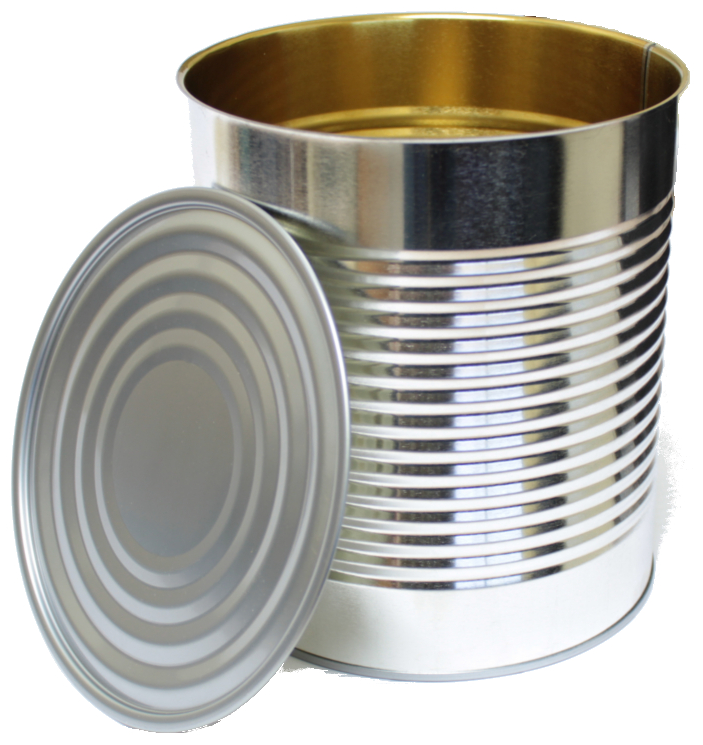
A tin can manufacturer designs a cylindrical tin can for a company making sanitizer and disinfector. The tin can is made to hold $3$ litres of sanitizer or disinfector.

Based on the above in formation, answer the following questions.
  1. If $r$ cm be the radius and h cm be the height of the cylindrical tin can, then the surface area expressed as a function of $r$ as.
  1. $2\pi\text{r}^2$
  2. $2\pi\text{r}^2+6000$
  3. $2\pi\text{r}^2+\frac{5000}{\text{r}}$
  4. $2\pi\text{r}^2+\frac{6000}{\text{r}}$
  1. The radius that will minimize the cost of the material to manufacture the tin can is.
  1. $\sqrt[3]{\frac{600}{\pi}}\text{cm}$
  2. $\sqrt{\frac{500}{\pi}}\text{cm}$
  3. $\sqrt[3]{\frac{1500}{\pi}}\text{cm}$
  4. $\sqrt{\frac{1500}{\pi}}\text{cm}$
  1. The height that will minimize the cost of the material to manufacture the tin can is.
  1. $\sqrt[3]{\frac{600}{\pi}}\text{cm}$
  2. $2\sqrt[3]{\frac{1500}{\pi}}\text{cm}$
  3. $\sqrt{\frac{1500}{\pi}}$
  4. $2\sqrt{\frac{1500}{\pi}}$
  1. If the cost of material used to manufacture the tin can is $₹\frac{100}{\text{m}^2}$ and $\sqrt[3]{\frac{1500}{\pi}}\approx7.8,$ then minimum cost is approximately.
  1. $₹\ 11.538$
  2. $₹\ 12$
  3. $₹\ 13$
  4. $₹\ 14$
  1. To minimize the cost of the material used to manufacture the tin can, we need to minimize the.
  1. Volume.
  2. Curved surface area.
  3. Total surface area.
  4. Surface area of the base.
Ankit wants to construct a rectangular tank for his house that can hold $80 \mathrm{ft}^3$ of water. He wants to construct on one corner of terrace so that sufficient space is left after construction of tank. For that he has to keep width of tank constant $5 \mathrm{ft}$, but the length and heights are variables. The top of the tank is open. Building the tank cost ₹20 per sq. foot for the base and ₹10 per sq. foot for the side.

Image

(i) Express cost of tank as a function of height(h).

(ii) Verify by second derivative test that cost is minimum at critical point.

(iii) Find the value of $\mathrm{h}$ at which $\mathrm{c}(\mathrm{h})$ is minimum.

OR

Find the minimum cost of tank?

A poster is to be formed for a company advertisement. The top and bottom margins of poster should be 9cm and the side margins should be 6cm. Also, the area for printing the advertisement should be $864cm^2$.

Based on the above information, answer the following questions.
  1. If a cm be the width and b cm be the height of Poster, then the area of poster, expressed in terms of a and b, is given by.
  1. $648 + 18a + 12b$
  2. $18a + 12b$
  3. $584 + 18a + 12b$
  4. None of these
  1. The relation between a and b is given by.
  1. $\text{a}=\frac{648+12\text{b}}{\text{b}-18}$
  2. $\text{a}=\frac{12\text{b}}{\text{b}-18}$
  3. $\text{a}=\frac{12\text{b}}{\text{b}+18}$
  4. $\text{None of these}$
  1. Area of poster in terms of bis given by.
  1. $\text{a}=\frac{12\text{b}^2}{\text{b}-18}$
  2. $\text{a}=\frac{648\text{b}+12\text{b}^2}{\text{b}-18}$
  3. $\text{a}=\frac{648\text{b}+12\text{b}^2}{\text{b}+18}$
  4. $\text{a}=\frac{12\text{b}^2}{\text{b}+18}$
  1. The value of b, so that area of the poster is minimized, is.
  1. 54
  2. 36
  3. 27
  4. 22
  1. The value of a, so that area of the poster is minimized, is.
  1. 24
  2. 36
  3. 40
  4. 22