Question
If a real valued function $f(x)$ is finitely derivable at any point of its domain, it is necessarily continuous at that point. But its converse need not be true.
For example, every polynomial, constant function are both continuous as well as differentiable and inverse trigonometric functions are continuous and differentiable in its domains etc.
Based on the above information, answer the following questions.
  1. If $\text{f}(\text{x})=\begin{cases}\text{x},\text{for x}\leq0\\0,\text{for x}>0\end{cases},$ then at $x = 0$
  1. $f(x)$ is differentiable and continuous.
  2. $f(x)$ is neither continuous nor differentiable.
  3. $f(x)$ is continuous but not differentiable.
  4. None of these.
  1. If $\text{f}(\text{x})=|\text{x}-1|,\text{x }\in\text{ R},$ then at $x = 1$
  1. $f(x)$ is not continuous.
  2. $f(x)$ is continuous but not differentiable.
  3. $f(x)$ is continuous and differentiable.
  4. None of these.
  1. $f(x) = x^3$ is:
  1. Continuous but not differentiable at $x = 3$
  2. Continuous but not differentiable at $x = 3$
  3. Neither continuous nor differentiable at $x = 3$
  4. None of these.
  1. If $\text{f}(\text{x})=[\sin\text{x}],$ then which of the following is true?
  1. $f(x)$ is continuous and differentiable at $x = 0.$
  2. $f(x)$ is discontinuous at $x = 0.$
  3. $f(x)$ is continuous at $x = 0$ but not differentiable.
  4. $f(x)$ is differentiable but not continuous at $\text{x}=\frac{\pi}{2}.$
  1. If $\text{f}(\text{x})=\sin^{-1}\text{x},-1\leq\text{x}\leq1,$ then:
  1. $f(x)$ is both continuous and differentiable.
  2. $f(x)$ is neither continuous nor differentiable.
  3. $f(x)$ is continuous but not differentiable.
  4. None of these.

Answer

  1. (c) $f(x)$ is continuous but not differentiable.
  1. (b) $f(x)$ is continuous but not differentiable.
  1. (b) Continuous but not differentiable at $x = 3$
  1. (b) $f(x)$ is discontinuous at $x = 0.$
  1. (a) $f(x)$ is both continuous and differentiable.

Need a full question paper?

Generate a complete, print-ready paper with questions like this in minutes — across 16+ boards, with answer keys.

Start Generating Free

Similar questions

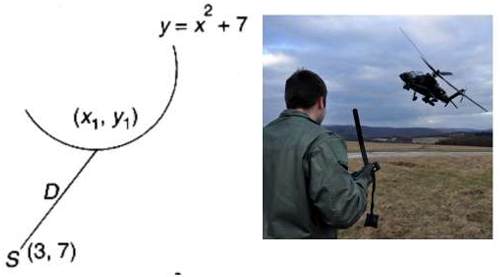
An Apache helicopter of the enemy is flying along the curve given by $y=x^2+7$. A soldier, placed at $(3,7)$ want to shoot down the helicopter when it is nearest to him.

Image

(i) If $\mathrm{P}\left(\mathrm{x}_1, \mathrm{y}_1\right)$ be the position of a helicopter on curve $\mathrm{y}=\mathrm{x}^2+7$, then find distance $\mathrm{D}$ from $\mathrm{P}$ to soldier place at $(3,7)$.

(ii) Find the critical point such that distance is minimum.

(iii) Verify by second derivative test that distance is minimum at $(1,8)$.

OR

Find the minimum distance between soldier and helicopter?

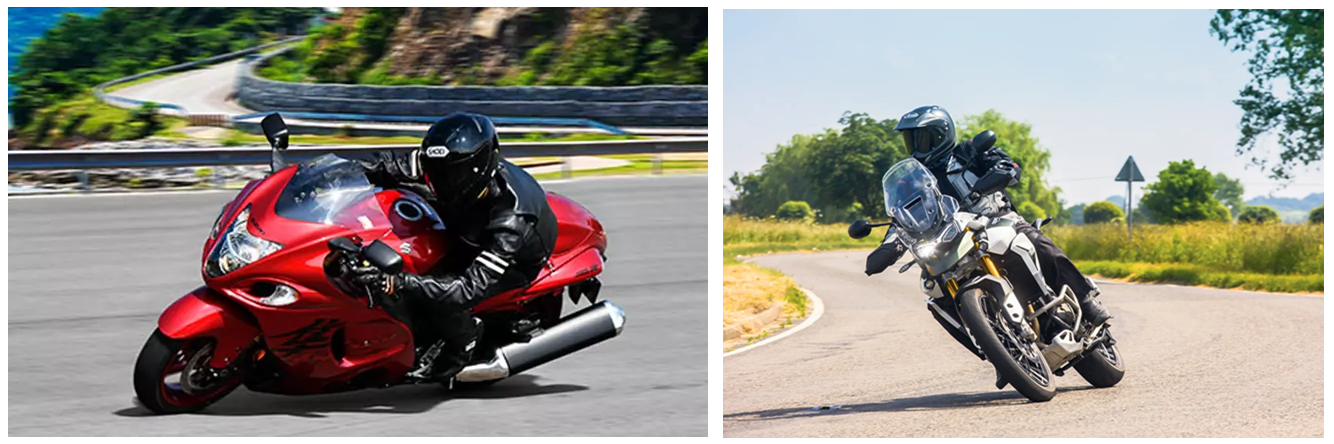
Two motorcycles A and Bare running at the speed more than allowed speed on the road along the lines $\vec{\text{r}}=\lambda(\hat{\text{i}}+2\hat{\text{j}}-\hat{\text{k}})$ and $\vec{\text{r}}=3\hat{\text{i}}+3\hat{\text{j}}+\mu(2\hat{\text{i}+\hat{\text{j}}+\hat{\text{k}}}),$ respectively. Based on the above information, answer the following questions.
  1. The cartesian equation of the line along which motorcycle A is running is:
  1. $\frac{\text{x}+1}{1}=\frac{\text{y}+1}{2}=\frac{\text{z}-1}{-1}$
  2. $\frac{\text{x}}{1}=\frac{\text{y}}{2}=\frac{\text{z}}{-1}$
  3. $\frac{\text{x}}{1}=\frac{\text{y}}{2}=\frac{\text{z}}{1}$
  4. None of these
  1. The direction cosines of line along which motorcycle A is running, are:
  1. < 1, -2, 1 >
  2. < I, 2, -1 >
  3. $<\frac{1}{\sqrt{6}},\frac{-2}{\sqrt{6}},\frac{1}{\sqrt{6}}>$
  4. $<\frac{1}{\sqrt{6}},\frac{2}{\sqrt{6}},\frac{-1}{\sqrt{6}}>$
  1. The direction ratios of line along which motorcycle Bis running, are:
  1. < 1, 0, 2 >
  2. < 2, 1, 0 >
  3. < 1, 1, 2 >
  4. < 2, 1, 1 >
  1. The shortest distance between the gives lines is:
  1. 4 units
  2. $2\sqrt{3}\text{ units}$
  3. $3\sqrt{2}\text{ units}$
  4. 0 units
  1. The motorcycles will meet with an accident at the point:
  1. (-1, 1, 2)
  2. (2, 1, -1)
  3. (1, 2, -1)
  4. Does not exist
If the area of a circle increases at a uniform rate, then prove that perimeter varies inversely as the radius.
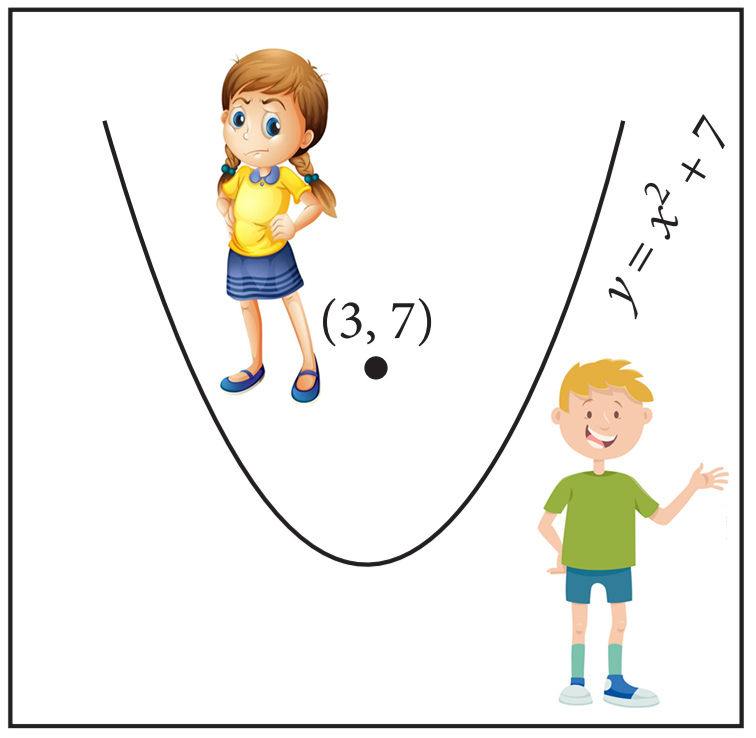
A student Arun is running on a playground along the curve given by $y = x^2 + 7$. Another student Manila standing at point $(3, 7)$ on playground wants to hit Arun by paper ball when Arun is nearest to Manila.

Based on above information, answer the following questions.
  1. Arun's position at any value of x will be.
  1. $(x^2, y - 7)$
  2. $(x^2, y + 7)$
  3. $(x, x^2 + 7)$
  4. $(x^2, x - 7)$
  1. Distance (say D) between Arun and Manila will be.
  1. $(\text{x}-1)(2\text{x}^2+2\text{x}+3)$
  2. $(\text{x}-3)^2+\text{x}^4$
  3. $\sqrt{(\text{x}-3)+\text{x}^4}$
  4. $\sqrt{(\text{x}-1)(2\text{x}^2+2\text{x}+3)}$
  1. For which real value(s) of x, first derivative of $D^2$ w.r.t, x will Vanish?
  1. 1
  2. 2
  3. 3
  4. 4
  1. Find the position of Arun when Manila will hit the paper hall.
  1. (5, 32)
  2. (1, 8)
  3. (3, 7)
  4. (3, 16)
  1. The minimum value of D is.
  1. $3$
  2. $\sqrt{3}$
  3. $5$
  4. $\sqrt{5}$
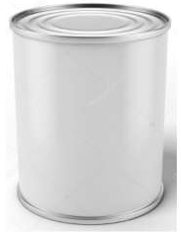
A tin can manufacturer designs a cylindrical tin can for a company making sanitizer and disinfectors. The tin can is made to hold 3 litres of sanitizer or disinfector. The cost of material used to manufacture the tin can is $₹ 100 / \mathrm{m}^2$.

Image

(i) If $\mathrm{r} \mathrm{cm}$ be the radius and $\mathrm{h} \mathrm{cm}$ be the height of the cylindrical tin can, then express the surface area as a function of radius (r)

(ii) Find the radius of the can that will minimize the cost of tin used for making can?

(iii) Find the height that will minimize the cost of tin used for making can ?

OR

Find the minimum cost of material used to manufacture the tin can.

Gaurav purchased $5$ pens, $3$ bags and $1$ instrument box and pays $₹ 16$. From the same shop, Dheeraj purchased $2$ pens, $1$ bag and $3$ instrument boxes and pays $₹ 19,$ while Ankur purchased $1$ pen, $2$ bags and $4$ instrument boxes and pays $₹ 25.$

Using the concept of matrices and determinants, answer the following questions.
  1. The cost of one pen is:
  1. $₹ 2$
  2. $₹ 5$
  3. $₹ 1$
  4. $₹ 3$
  1. What is the cost of one pen and one bag?
  1. $₹ 3$
  2. $₹ 5$
  3. $₹ 7$
  4. $₹ 8$
  1. What is the cost of one pen and one instrument box?
  1. $₹ 7$
  2. $₹ 6$
  3. $₹ 8$
  4. $₹ 9$
  1. Which of the following is correct?
  1. Determinant is a square matrix.
  2. Determinant is a number associated to a matrix.
  3. Determinant is a number associated to a square matrix.
  4. All of the above.
  1. From the matrix equation $AB = AC,$ it can be concluded that $B = C$ provided:
  1. $A$ is singular.
  2. $A$ is non-singular.
  3. $A$ is symmetric.
  4. $A$ is square.
Read the following passage and answer the questions given below.

Image

There are two antiaircraft guns, named as A and B. The probabilities that the shell fired from them hits an airplane are 0.3 and 0.2 respectively. Both of them fired one shell at an airplane at the same time.
(i) What is the probability that the shell fired from exactly one of them hit the plane?
(ii) If it is known that the shell fired from exactly one of them hit the plane, then what is the probability that it was fired from B?

Read the following text carefully and answer the questions that follow:
To hire a marketing manager, it's important to find a way to properly assess candidates who can bring radical
changes and has leadership experience.
Ajay, Ramesh and Ravi attend the interview for the post of a marketing manager. Ajay, Ramesh and Ravi
chances of being selected as the manager of a firm are in the ratio $4:1:2$ respectively. The respective probabilities for them to introduce a radical change in marketing strategy are $0.3, 0.8,$ and $0.5$. If the change does take place.
Image
$i.$ Find the probability that it is due to the appointment of Ajay $(A). (1)$
$ii.$ Find the probability that it is due to the appointment of Ramesh $(B). (1)$
$iii$. Find the probability that it is due to the appointment of Ravi $(C). (2)$
OR
Find the probability that it is due to the appointment of Ramesh or Ravi. $(2)$
Arka bought two cages of birds: Cage $-I$ contains $5$ parrots and $1$ owl and Cage $-II$ contains $6$ parrots. One day Arka forgot to lock both cages and two birds flew from Cage $-I$ to Cage $-II$ $($simultaneously$)$. Then two birds flew back from cage $-II$ to cage $-I\ ($simultaneously$)$. Assume that all the birds have equal chances of flying. On the basis of the above information, answer the following questions: $-$
$(i)$ When two birds flew from Cage $-I$ to Cage $-II$ and two birds flew back from Cage $-II$ to Cage $-I$ then find the probability that the owl is still in Cage $-I$.
$(ii)$ When two birds flew from Cage $-I$ to Cage $-II$ and two birds flew back from Cage $-II$ to Cage $-I,$ the owl is still seen in Cage $-I,$ what is the probability that one parrot and the owl flew from Cage $-I$ to Cage $-II$ ?
To teach the application of probability a maths teacher arranged a surprise game for 5 of his students namely Archit, Aadya, Mivaan, Deepak and Vrinda. He took a bowl containing tickets numbered 1 to 50 and told the students go one by one and draw two tickets simultaneously from the bowl and replace it after noting the numbers. Based on the above information, answer the following questions.
  1. Teacher ask Vrinda, what is the probability that both tickets drawn by Arch it shows even number?
  1. $\frac{1}{50}$
  2. $\frac{12}{49}$
  3. $\frac{13}{49}$
  4. $\frac{15}{49}$
  1. Teacher ask Mivaan, what is the probability that both tickets drawn by Aadya shows odd number?
  1. $\frac{1}{50}$
  2. $\frac{2}{49}$
  3. $\frac{12}{49}$
  4. $\frac{5}{49}$
  1. Teacher ask Deepak, what is the probability that tickets drawn by Mivaan, shows a multiple of 4 on one ticket and a multiple 5 on other ticket?
  1. $\frac{14}{245}$
  2. $\frac{16}{245}$
  3. $\frac{24}{245}$
  4. None of these.
  1. Teacher ask Arch it, what is the probability that tickets are drawn by Deepak, shows a prime number on one ticket and a multiple of 4 on other ticket?
  1. $\frac{3}{245}$
  2. $\frac{17}{245}$
  3. $\frac{18}{245}$
  4. $\frac{36}{245}$
  1. Teacher ask Aadya, what is the probability that tickets drawn by Vrinda, shows an even number on first ticket and an odd number on second ticket?
  1. $\frac{15}{98}$
  2. $\frac{25}{98}$
  3. $\frac{35}{98}$
  4. None of these.