MCQ
If a tunnel is made along the diameter of the 90 and in that if you leave a stone :
  • A
    The stone will stop at the centre of the earth
  • B
    The stone will stop after reaching the other end of the earth
  • The stone will make simple harmonic motion at the centre of the earth
  • D
    The stone will reach the other end of the earth and go into space
Answer

Correct option: C.
The stone will make simple harmonic motion at the centre of the earth
(C)

Need a full question paper?

Generate a complete, print-ready paper with questions like this in minutes — across 16+ boards, with answer keys.

Start Generating Free

Similar questions

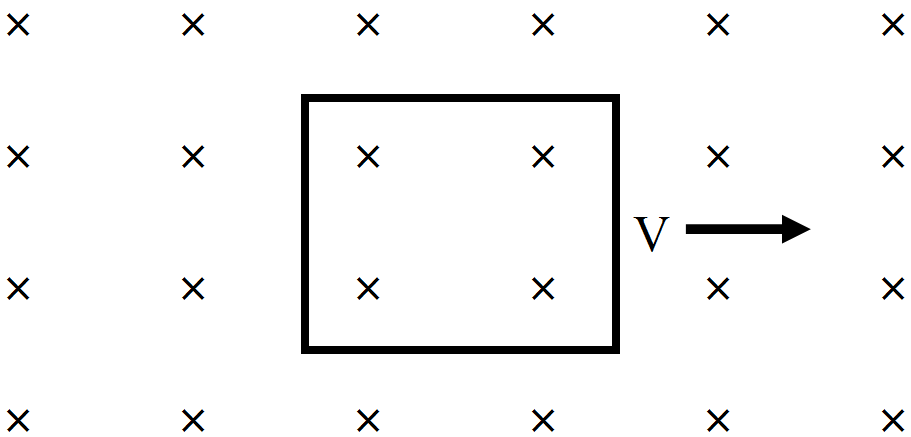
A conducting square loop of side l and resistance R moves in its plane with a uniform velocity u perpendicular to one of its sides. A uniform and constant magnetic field B exists along the perpendicular to the plane of the loop as shown in figure. The current induced in the loop is:
The angle of contact between glass and mercury is......... $^o$
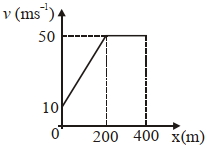
The velocity-displacement graph describing the motion of a bicycle is shown in the figure.

The acceleration-displacement graph of the bicycle's motion is best described by

An object of mass $m$ moves with constant speed in a circular path of radius $R$ under the action of a force of constant magnitude $F$. The kinetic energy of object is ............
An iron tyre is to be fitted on to a wooden wheel 1m in diameter. The diameter of tyre is $6\, mm$ smaller than that of wheel. The tyre should be heated so that its temperature increases by a minimum of ........ $^oC$ (the coefficient of cubical expansion of iron is ${3.6 \times 10^{-5} } °C^{-1}$)
The axis of rotation of a purely rotating body:
  1. Must pass through the centre of mass.
  2. May pass through the centre of mass.
  3. Must pass through a particle of the body.
  4. May pass through a particle of the body.
The surface tension of a liquid at its boiling point
Two capillary tubes of same diameter are put vertically one each in two liquids whose relative densities are $0.8$ and $0.6$ and surface tensions are $60$ and $50$ dyne/cm respectively Ratio of heights of liquids in the two tubes $\frac{{{h_1}}}{{{h_2}}}$ is
For an ideal gas, in an isothermal process
The resultant of $\overrightarrow P $ and $\overrightarrow Q $ is perpendicular to $\overrightarrow P $. What is the angle between $\overrightarrow P $ and $\overrightarrow Q $