MCQ
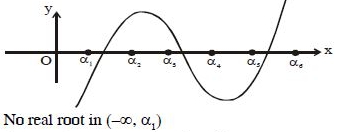
If $\alpha_1<\alpha_2<\alpha_3<\alpha_4<\alpha_5<\alpha_6$, then the equation $(x-\alpha_1)(x-\alpha_3) (x-\alpha_5) + 3 (x-\alpha_2) (x-\alpha_4) (x-\alpha_6) = 0$ has :-
  • A
    No real root in $(\alpha_5,\alpha_6)$
  • B
    No real root in $(\alpha_1,\alpha_2)$
  • C
    All roots are imaginary
  • No real root in $(-\infty,\alpha_1)$

Answer

Correct option: D.
No real root in $(-\infty,\alpha_1)$
d

Need a full question paper?

Generate a complete, print-ready paper with questions like this in minutes — across 16+ boards, with answer keys.

Start Generating Free

Similar questions

The number of four -digit numbers strictly greater than $4321$ that can be formed using the digits $0, 1, 2, 3, 4, 5$ (repetition of digits is allowed) is
The product $2^{\frac{1}{4}} \cdot 4^{\frac{1}{16}} \cdot 8^{\frac{1}{48}} \cdot 16^{\frac{1}{128}} \cdot \ldots .$ to $\infty$ is equal to
Given that $n$ A.M.'s are inserted between two sets of numbers $a,\;2b$and $2a,\;b$, where $a,\;b \in R$. Suppose further that ${m^{th}}$ mean between these sets of numbers is same, then the ratio $a:b$ equals
Let ${a_1},{a_2}...,{a_{10}}$ be a $G.P.$ If $\frac{{{a_3}}}{{{a_1}}} = 25,$ then $\frac {{{a_9}}}{{{a_{  5}}}}$ equal
Let $f(x) = \left\{ \begin{array}{l} \left( {3 - \sin \,\left( {1/x} \right)} \right)\,\left| x \right|,\,\,\,\,x \ne 0\\ 0,\,\,\,\,\,\,\,\,\,\,\,\,\,\,\,\,\,\,\,\,\,\,\,\,\,\,\,\,\,\,\,\,\,\,\,\,\,x = 0\,\, \end{array} \right.\,$ . Then at $x = 0 , f$ has a
Consider ellipses $E _{ k }: kx ^2+ k ^2 y ^2=1, k =1,2, \ldots$,$20$. Let $C _{ k }$ be the circle which touches the four chords joining the end points (one on minor axis and another on major axis) of the ellipse $E_k$, If $r_k$ is the radius of the circle $C _{ k }$, then the value of $\sum \limits_{ k =1}^{20} \frac{1}{ I _{ k }^2}$ is $.......$.
If $a \in R$ and the equation $ - 3{\left( {x - \left[ x \right]} \right)^2} + 2\left( {x - \left[ x \right]} \right) + {a^2} = 0$ (where $[x]$ denotes the greatest integer $\leq\,x$) has no integral solution, then all possible values of $a$ lie in the interval
Let complex number $z$ be such that $|z- \frac{6}{z}|=5$ then maximum value of $|z|$ will be -
Let $[t]$ denote the greatest integer less than or equal to $t$. Then the value of the integral $\int_{-3}^{101}\left([\sin (\pi x)]+e^{[\cos (2 \pi x)]}\right) d x$ is equal to
The probability of choosing at random a number that is divisible by $6$ or $8$ from among $1$ to $90$ is equal to