Question
If $\begin{bmatrix}\cos\frac{2\pi}{7}&-\sin\frac{2\pi}{7}\\\sin\frac{2\pi}{7}&\cos\frac{2\pi}{7}\end{bmatrix}^\text{k}=\begin{bmatrix}1&0\\0&1\end{bmatrix},$ then the least positive integral value of k is:
  1. 3
  2. 4
  3. 6
  4. 7

Answer

  1. 7
Solution:
$\text{A}=\begin{bmatrix}\cos\frac{2\pi}{7}&-\sin\frac{2\pi}{7}\\\sin\frac{2\pi}{7}&\cos\frac{2\pi}{7}\end{bmatrix}$
$\Rightarrow\text{A}^2=\text{A}\times\text{A}$
$\Rightarrow\text{A}^2=\begin{bmatrix}\cos\frac{2\pi}{7}&-\sin\frac{2\pi}{7}\\\sin\frac{2\pi}{7}&\cos\frac{2\pi}{7}\end{bmatrix}\begin{bmatrix}\cos\frac{2\pi}{7}&-\sin\frac{2\pi}{7}\\\sin\frac{2\pi}{7}&\cos\frac{2\pi}{7}\end{bmatrix}$
$\Rightarrow\text{A}^2=\begin{bmatrix}\cos^2\frac{2\pi}{7}-\sin^2\frac{2\pi}{7}&\Big(-2\cos\frac{2\pi}{7}-\sin\frac{2\pi}{7}\Big)\\2\cos\frac{2\pi}{7}\sin\frac{2\pi}{7}&\cos\frac{2\pi}{7}-\sin^2\frac{2\pi}{7}\end{bmatrix}$
$\Rightarrow\text{A}^2=\begin{bmatrix}\cos\frac{4\pi}{7}&-\sin\frac{4\pi}{7}\\\sin\frac{4\pi}{7}&\cos\frac{4\pi}{7}\end{bmatrix}$$\begin{bmatrix}\because\ \cos^2\theta-\sin^2\theta=\cos2\theta\\2\sin\theta\cos\theta=\sin2\theta\end{bmatrix}$
$\Rightarrow\text{A}^3=\text{A}^2\times\text{A}$
$\Rightarrow\text{A}^3=\begin{bmatrix}\cos\frac{4\pi}{7}&-\sin\frac{4\pi}{7}\\\sin\frac{4\pi}{7}&\cos\frac{4\pi}{7}\end{bmatrix}\begin{bmatrix}\cos\frac{2\pi}{7}&-\sin\frac{2\pi}{7}\\\sin\frac{2\pi}{7}&\cos\frac{2\pi}{7}\end{bmatrix}$
$\Rightarrow\text{A}^3=\begin{bmatrix}\Big(\cos\frac{4\pi}{7}\cos\frac{2\pi}{7}-\sin\frac{4\pi}{7}\sin\frac{2\pi}{7}\Big)&\Big(-\cos\frac{4\pi}{7}\sin\frac{2\pi}{7}-\sin\frac{4\pi}{7}\cos\frac{2\pi}{7}\Big)\\\Big(\sin\frac{4\pi}{7}\cos\frac{2\pi}{7}+\cos\frac{4\pi}{7}\sin\frac{2\pi}{7}\Big)&\Big(-\sin\frac{2\pi}{7}\sin\frac{4\pi}{7}+\cos\frac{4\pi}{7}\cos\frac{2\pi}{7}\Big)\end{bmatrix}$
$\Rightarrow\text{A}^3=\begin{bmatrix}\cos\frac{6\pi}{7}&-\sin\frac{6\pi}{7}\\\sin\frac{6\pi}{7}&\cos\frac{6\pi}{7}\end{bmatrix}$$\begin{bmatrix}\because\ \cos\text{(A+B)}=\cos\text{A}\cos\text{B}-\sin\text{A}\sin\text{B}\\\sin\text{(A+B)}=\sin\text{A}\cos\text{B}+\cos\text{A}\sin\text{B}\end{bmatrix}$
Now we check if the pattern is same for k = 6.
Here,
$\text{A}^6=\text{A}^3.\text{A}^3$
$\Rightarrow\text{A}^6=\begin{bmatrix}\cos\frac{6\pi}{7}&-\sin\frac{6\pi}{7}\\\sin\frac{6\pi}{7}&\cos\frac{6\pi}{7}\end{bmatrix}\begin{bmatrix}\cos\frac{6\pi}{7}&-\sin\frac{6\pi}{7}\\\sin\frac{6\pi}{7}&\cos\frac{6\pi}{7}\end{bmatrix}$
$\Rightarrow\text{A}^6=\begin{bmatrix}\cos\frac{12\pi}{7}&-\sin\frac{12\pi}{7}\\\sin\frac{12\pi}{7}&\cos\frac{12\pi}{7}\end{bmatrix}$
Now, we check if the pattern is same for k = 7.
Here,
$\text{A}^7=\text{A}^6\times\text{A}$
$\Rightarrow\text{A}^7=\begin{bmatrix}\cos\frac{6\pi}{7}&-\sin\frac{6\pi}{7}\\\sin\frac{6\pi}{7}&\cos\frac{6\pi}{7}\end{bmatrix}\begin{bmatrix}\cos\frac{2\pi}{7}&-\sin\frac{2\pi}{7}\\\sin\frac{2\pi}{7}&\cos\frac{2\pi}{7}\end{bmatrix}$
$\Rightarrow\text{A}^7=\begin{bmatrix}\cos\frac{14\pi}{7}&-\sin\frac{14\pi}{7}\\\sin\frac{14\pi}{7}&\cos\frac{14\pi}{7}\end{bmatrix}$
$\Rightarrow\text{A}^7=\begin{bmatrix}\cos2\pi&-\sin2\pi\\\sin2\pi&\cos2\pi\end{bmatrix}$$\begin{bmatrix}\because\ \frac{14\pi}{7}=2\pi\end{bmatrix}$
$=\begin{bmatrix}1&0\\0&1\end{bmatrix}$
So, the least positive integral value of k is 7.

Need a full question paper?

Generate a complete, print-ready paper with questions like this in minutes — across 16+ boards, with answer keys.
Start Generating Free

Similar questions

If $\text{f(x)}=\begin{cases}\frac{36^\text{x}-9^\text{x}-4\text{x}+1}{\sqrt{2}-\sqrt{1+\cos\text{x}}},&\text{x}\neq0\\\text{k},&\text{x}=0\end{cases}$ is continuous at $x = 0,$ these $k$ equals.
If $\text{S}=\begin{bmatrix}\text{a} & \text{b} \\ \text{c} & \text{d} \end{bmatrix},$ then adj A is:
  1. $\begin{bmatrix} -\text{d} & -\text{b} \\ -\text{c} & \text{a} \end{bmatrix}$
  2. $\begin{bmatrix} \text{d} & -\text{b} \\ -\text{c} & \text{a} \end{bmatrix}$
  3. $\begin{bmatrix} \text{d} & \text{b} \\ \text{c} & \text{a} \end{bmatrix}$
  4. $\begin{bmatrix} \text{d} & \text{c} \\ \text{b} & \text{a} \end{bmatrix}$
If A, B are square matrices of order 3, A is non-singular and AB = 0, then B is a:
  1. Null matrix.
  2. Singular matrix.
  3. Unit-matrix.
  4. Non-singular matrix.
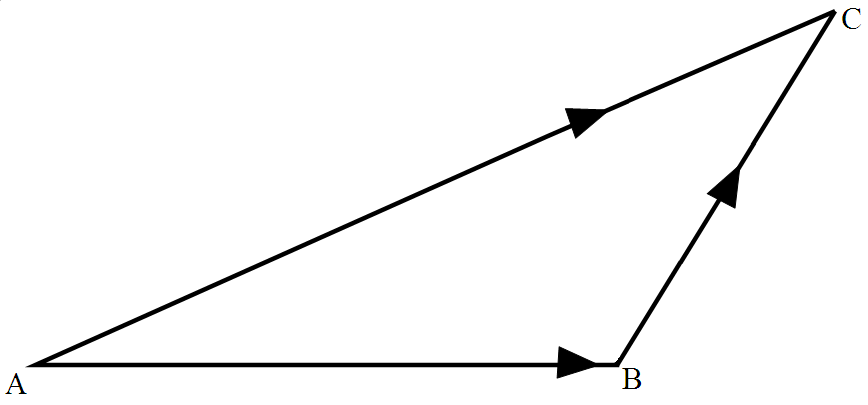
In figure, which of the following is not true?
  1. $​​​​​\overrightarrow{\text{AB}}+\overrightarrow{\text{BC}}+\overrightarrow{\text{CA}}=\vec0$
  2. $​​​​​\overrightarrow{\text{AB}}+\overrightarrow{\text{BC}}-\overrightarrow{\text{AC}}=\vec0$
  3. $​​​​​\overrightarrow{\text{AB}}+\overrightarrow{\text{BC}}-\overrightarrow{\text{CA}}=\vec0$
  4. $​​​​​\overrightarrow{\text{AB}}-\overrightarrow{\text{CB}}+\overrightarrow{\text{CA}}=\vec0$
The distance between the point (3, 4, 5) and the point where the line $\frac{\text{x}-3}{\text{1}}=\frac{\text{y}-4}{\text{2}}=\frac{\text{z}-5}{\text{2}}$ meets the plane x + y + z = 17 is:
  1. 1
  2. 2
  3. 3
  4. None of these
The value of the determinant of a matrix $A$ of order $3 \times 3$ is 4 . Find the value of $|5 A|$.
Evaluate: $\int \frac{d x}{\sqrt{1-2 x-x^2}}$
Evaluate: $\int\sqrt{1+\text{y}}^2.\text{2ydy:}$
  1. $\text{I}=\frac{2}{3}(1+\text{y}^2)^\frac{3}{2}+\text{c}$
  2. $\text{I}=\frac{2}{5}(1-\text{y}^2)\frac{3}{2}+\text{c}$
  3. $\text{I}=\frac{2}{3}(1-\text{y}^2)^\frac{3}{2}+\text{c}$
  4. None of these
If a matrix $A=\left[\begin{array}{lll}1 & 2 & 3\end{array}\right]$, then the matrix $A A^{\prime}\  ($where $A^{\prime}$ is the transpose of $A )$ is
The value of $\sin^{-1}\Big(\cos\frac{33\pi}{5}\Big)$ is:
  1. $\frac{33}{5}$
  2. $-\frac{\pi}{10}$
  3. $\frac{\pi}{10}$
  4. $\frac{7\pi}{5}$