Question

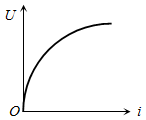
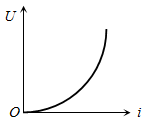
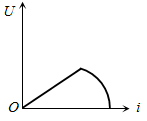
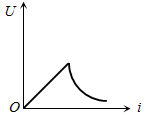
If current flowing through shell of previous objective is equal to i, then energy density at a point distance 2R from axis of the shell varies according to the graph

(a)

(b)

(c)

(d)

Answer

(b)

Need a full question paper?

Generate a complete, print-ready paper with questions like this in minutes — across 16+ boards, with answer keys.

Start Generating Free

Similar questions

The value of maximum amplitude produced due to interference of two waves is given by: $ y_{1}=4 \sin \omega t $ and $ y_{2}=3 \cos \omega t $
Each plate of a parallel plate capacitor has a charge q on it. The capacitor is now connected to a batter. Now:
  1. The facing surfaces of the capacitor have equal and opposite charges.
  2. The two plates of the capacitor have equal and opposite charges.
  3. The battery supplies equal and opposite charges to the two plates.
  4. The outer surfaces of the plates have equal charges.
The magnetic field produced at the centre of current carrying circular coil is :

Which of the following diagrams, shows correctly the dispersion of white light by a prism

(a)

(b)

(c)

(d)

The focal lengths of the objective and eye lens of a microscope are 4 cm and 8 cm respectively and the distance of the object from the objective is 4.5 cm , then the magnifying power will be :

Two infinitely long parallel wires carry equal current in same direction. The magnetic field at a mid point in between the two wires is

(a) Twice the magnetic field produced due to each of the wires

(b) Half of the magnetic field produced due to each of the wires

(c) Square of the magnetic field produced due to each of the wires

(d) Zero

There is a solid sphere of radius ‘R’ having uniformly distributed charge. What is the relation between electric field ‘E’ (inside the sphere) and radius of sphere ‘R’ is

(a) E  

(b) E

(c) E     

(d) E

X-rays are in nature similar to

(a) Beta rays

(b) Gamma rays

(c) de-Broglie waves

(d) Cathode rays

The polarisation is measured in:
A free neutron decays to a proton but a free proton does not decay to a neutron. This is because:
  1. Neutron is a composite particle made of a proton and an electron whereas proton is a fundamental particle.
  2. Neutron is an uncharged particle whereas proton is a charged particle.
  3. Neutron has large rest mass than the proton.
  4. Weak forces can operate in a neutron but not in a proton.