MCQ
If $\displaystyle \text{a}_{\text{ij}}=0\left (\text{i}\neq \text{j} \right )$ and $\displaystyle\text{a}_{\text{ij}}=2\left (\text{i= j} \right )$ then the matrix $\text{A}=\displaystyle \left [ \text{a}_{\text{ij}} \right ]_{\text{n}\times\text{n}}$ ​ is a _______ matrix ?
  • A
    unit
  • B
    null
  • scalar
  • D
    skew symmetric

Answer

Correct option: C.
scalar
Given A is a square matrix as the number of rows and columns are same as n

The elements $\text{a}_\text{ij}$​ where $\text{i} = \text{j} $ lie along the diagonal.

and the elements $\text{a}_\text{ij}$ ​ where $\text{i}\neq\text{j}$ do not lie along the diagonal.

Given, diagonal elements = 2 and the rest of the elements = 0

Such a diagonal matrix where all diagonal elements are equal, is called a scalar matrix.

Need a full question paper?

Generate a complete, print-ready paper with questions like this in minutes — across 16+ boards, with answer keys.

Start Generating Free

Similar questions

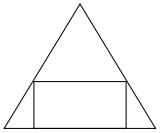
If a rectangle is inscribed in an equilateral triangle of side length $2 \sqrt{2}$ as shown in the figure, then the square of the largest area of such a rectangle is $....$
A fair coin is tossed $100$ times. The probability of getting tails an odd nimber of times is:
$\lim _{n \rightarrow \infty} \frac{1}{2^{n}}\left(\frac{1}{\sqrt{1-\frac{1}{2^{a}}}}+\frac{1}{\sqrt{1-\frac{2}{2^{n}}}}+\frac{1}{\sqrt{1-\frac{3}{2^{a}}}}+\ldots \ldots+\frac{1}{\sqrt{1-\frac{2^{a}-1}{2^{n}}}}\right)$ is equal to
If  $ a, b, c$  are coplanar vectors, then
Directions : In the following questions, the Assertions $(A)$ and Reason $(s)\ (R)$ have been put forward. Read both the statements carefully and choose the correct alternative from the following :
Assertion $ (A) : \frac{\text{d}}{\text{dx}}(\text{x}^2+\text{x}+1)^4=(\text{x}^2+\text{x}+1)^3(2\text{x}+1)$
Reason $ (R) : (\text{fog}\ '=\text{f '}[\text{g(x)}].\text{g '(x)}$
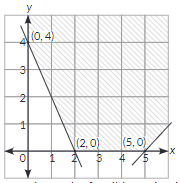
A linear programming problem (LPP) along with the graph of its constraints is shown below. The corresponding objective function is
Minimize: $Z=3 x+2 y$. The minimum value of the objective function is obtained at the corner point ( 2 , 0).
The optimal solution of the above linear programming problem $\qquad$
Image
Let $f : R \rightarrow R$ be a differentiable function such that $f (2) = 2$. Then the value of $\mathop {Limit}\limits_{x\,\, \to \,\,2}\, \int\limits_2^{f\,(x)} {\,\,\frac{{4\,{t^3}}}{{x\, - \,2}}}\,dt$ is
The roots of the equation $\left| {\,\begin{array}{*{20}{c}}{1 + x}&1&1\\1&{1 + x}&1\\1&1&{1 + x}\end{array}\,} \right| = 0$   are
Find the equation of the line which passes through the point $(1, 2, 3)$ and is parallel to the vector $3 \hat{i}+2 \hat{j}-2 \hat{k}$
Let $f: R \rightarrow R$ satisfy the equation $f(x+y)=f(x) \cdot f(y)$ for all $x, y \in R$ and
$f ( x ) \neq 0$ for any $x \in R .$ If Ihe function $f$ is differentiable at $x =0$ and $f^{\prime}(0)=3,$ then $\lim _{h \rightarrow 0} \frac{1}{h}(f(h)-1)$ is equal to ....... .