MCQ
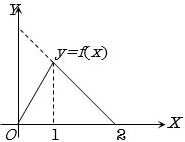
If $f(x) = \left\{ \begin{array}{l}\,\,\,\,\,\,\,x,\;{\rm{when\,\, }}0 \le x \le 1\\2 - x,\;{\rm{when \,\,}}1 < x \le 2\end{array} \right.$, then $\mathop {\lim }\limits_{x \to 1} f(x) = $
  • $1$
  • B
    $2$
  • C
    $0$
  • D
    Does not exist

Answer

Correct option: A.
$1$
Hence $\mathop {\lim }\limits_{x \to 1} \,f(x) = 1$
Aliter : $\mathop {\lim }\limits_{x \to 1 - } \,f(x) = \mathop {\lim }\limits_{h \to 0} \,\,(1 - h) = 1$
and $\mathop {\lim }\limits_{x \to 1 + } \,f(x) = \mathop {\lim }\limits_{h \to 0} \,\,2 - (1 + h) = 1$
Hence limit of function is $1$.

Need a full question paper?

Generate a complete, print-ready paper with questions like this in minutes — across 16+ boards, with answer keys.

Start Generating Free

Similar questions

The sum of few terms of any ratio series is $728$, if common ratio is $3$ and last term is $486$, then first term of series will be
Two card are drawn successively with replacement from a pack of $52$ cards. The probability of drawing two aces is
$A = \left[ {\begin{array}{*{20}{c}}4&6&{ - 1}\\3&0&2\\1&{ - 2}&5\end{array}} \right]$,$B = \left[ {\begin{array}{*{20}{c}}2&4\\0&1\\{ - 1}&2\end{array}} \right],\,\,C = \left[ {\begin{array}{*{20}{c}}3\\1\\2\end{array}} \right]$, then the expression which is not defined is
The sum of solutions of the equation $\frac{\cos \mathrm{x}}{1+\sin \mathrm{x}}=|\tan 2 \mathrm{x}|, \mathrm{x} \in\left(-\frac{\pi}{2}, \frac{\pi}{2}\right)-\left\{\frac{\pi}{4},-\frac{\pi}{4}\right\}$ is :
If $a \ne 6,b,c$ satisfy $\left| {\,\begin{array}{*{20}{c}}a&{2b}&{2c}\\3&b&c\\4&a&b\end{array}\,} \right| = 0,$then $abc = $
Let $f( x )=\left\{\begin{array}{cc}-2, & -2 \leq x \leq 0 \\ x -2, & 0< x \leq 2\end{array}\right.$ and $h ( x )= f ( x \mid)+| f ( x )|$ Then $\int_{-2}^2 h(x) d x$ is equal to :
The function $f(x) = 2{x^3} - 15{x^2} + 36x + 4$  is maximum at $x=$ ......
The sum and product of the mean and variance of a binomial distribution are $82.5$ and $1350$ respectively. They the number of trials in the binomial distribution is.
Suppose a parabola $y=a x^2+b x+c$ has two $x$ intercepts, one positive and one negative, and its vertex is $(2,-2)$. Then, which of the following is true?
The point $(0.1, 3.1)$ with respect to the circle ${x^2} + {y^2} - 2x - 4y + 3 = 0$, is