MCQ
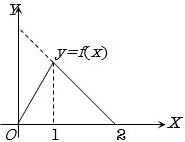
If $f(x) = \left\{ \begin{array}{l}\,\,\,\,\,\,\,x,\;{\rm{when\,\, }}0 \le x \le 1\\2 - x,\;{\rm{when \,\,}}1 < x \le 2\end{array} \right.$, then $\mathop {\lim }\limits_{x \to 1} f(x) = $
  • $1$
  • B
    $2$
  • C
    $0$
  • D
    Does not exist

Answer

Correct option: A.
$1$
a
(a) Hence $\mathop {\lim }\limits_{x \to 1} \,f(x) = 1$

Aliter : $\mathop {\lim }\limits_{x \to 1 - } \,f(x) = \mathop {\lim }\limits_{h \to 0} \,\,(1 - h) = 1$

and $\mathop {\lim }\limits_{x \to 1 + } \,f(x) = \mathop {\lim }\limits_{h \to 0} \,\,2 - (1 + h) = 1$

Hence limit of function is $1$.
Need a full question paper?

Generate a complete, print-ready paper with questions like this in minutes — across 16+ boards, with answer keys.

Start Generating Free

Similar questions

An investigator interviewed 100 students to determine the performance of three drinks: milk, coffee and tea. The investigator reported that 10 students take all three drinks milk, coffee and tea; 20 students take milk and coffee; 25 students take milk and tea; 12 students take milk only; 5 students take coffee only and 8 students take tea only. Then the number of students who did not take any of three drinks is:
Any circle through the points of intersection of the lines $x + \sqrt 3\, y = 1$ and $\sqrt 3\, x -y = 2$ if intersects these lines at points $P$ and $Q$, then the angle subtended by the arc $PQ$ at its centre is- ............. $^o$
Let $P(4, -4)$ and $Q(9, 6)$ be two points on the parabola, $y^2 = 4x$ and let $X$ be any point on the arc $POQ$ of this parabola, where $O$ is the vertex of this parabola, such that the area of $\Delta PXQ$ is maximum. Then this maximum Area (in sq. units) is
Consider ellipses $E _{ k }: kx ^2+ k ^2 y ^2=1, k =1,2, \ldots$,$20$. Let $C _{ k }$ be the circle which touches the four chords joining the end points (one on minor axis and another on major axis) of the ellipse $E_k$, If $r_k$ is the radius of the circle $C _{ k }$, then the value of $\sum \limits_{ k =1}^{20} \frac{1}{ I _{ k }^2}$ is $.......$.
The total number of subsets of {1, 2, 6, 7} are?
If $f(x) = 4{x^3} + 3{x^2} + 3x + 4$, then ${x^3}f\left( {\frac{1}{x}} \right)$ is
Let U be the universal set containing 700 elements. If A, B are subsets of U such that $\text{n(A)}=200,\text{ n(B)}=300$ and $\text{n(A}\cap\text{B)}=100.$ Then, $\text{n(A}'\cap\text{B}')=$
What is the modal value for the numbers 5, 8, 6, 4, 10, 15, 18, 10?
If $e ^{\left(\cos ^{2} x+\cos ^{4} x+\cos ^{6} x+\ldots \ldots \infty\right) \log _{e} 2}$ satisfies the equation $t ^{2}-9 t +8=0,$ then the value of $\frac{2 \sin x}{\sin x+\sqrt{3} \cos x}\left(0 < x < \frac{\pi}{2}\right)$ is
If the sum of the coefficients in the expansion of ${({\alpha ^2}{x^2} - 2\alpha {\rm{ }}x + 1)^{51}}$ vanishes, then the value of $\alpha $ is