Question
If $\text{y}=\text{a}\{\text{x}+\sqrt{\text{x}^2+1}\}^\text{n}+\text{b}\{\text{x}-\sqrt{\text{x}^2+1}\}^{-\text{n},}$ prove that $(\text{x}^2-1)\frac{\text{d}^2\text{y}}{\text{dx}^2}+\text{x}\frac{\text{dy}}{\text{dx}}-\text{n}^2\text{y}=0.$
Answer

We have
$\text{y}=\text{a}\{\text{x}+\sqrt{\text{x}^2+1}\}^\text{n}+\text{b}\{\text{x}-\sqrt{\text{x}^2+1}\}^{-\text{n},}$
Differentiating y with respect to x, we get
$\frac{\text{dy}}{\text{dx}}=\text{an}\{\text{x}+\sqrt{\text{x}^2+1}\}^{\text{n}-1}\Big(1+\frac{1}{2\sqrt{\text{x}^2+1}\times2\text{x}}\Big)-\text{bn}\{\text{x}-\sqrt{\text{x}^2+1}\}^{-\text{n}-1}\Big(1-\frac{1}{2\sqrt{\text{x}^2+1}\times2\text{x}}\Big)$
$=\text{an}\{\text{x}+\sqrt{\text{x}^2+1}\}^{\text{n}-1}\Big(1+\frac{\text{x}}{\sqrt{\text{x}^2+1}}\Big)-\text{bn}\{\text{x}-\sqrt{\text{x}^2+1}\}^{-\text{n}-1}\Big(1-\frac{\text{x}}{\sqrt{\text{x}^2+1}}\Big)$
$=\text{an}\{\text{x}+\sqrt{\text{x}^2+1}\}^{\text{n}-1}\Big(\frac{\sqrt{\text{x}^2+1}+\text{x}}{\sqrt{\text{x}^2+1}}\Big)-\text{bn}\{\text{x}-\sqrt{\text{x}^2+1}\}^{\text{n}-1}\Big(\frac{\sqrt{\text{x}^2+1}-\text{x}}{\sqrt{\text{x}^2+1}}\Big)$
$=\text{an}\{\text{x}+\sqrt{\text{x}^2+1}\}^{\text{n}-1}\Big(\frac{\text{x}+\sqrt{\text{x}^2+1}}{\sqrt{\text{x}^2+1}}\Big)+\text{bn}\{\text{x}-\sqrt{\text{x}^2+1}\}^{-\text{n}-1}\Big(\frac{\text{x}\sqrt{\text{x}^2+1}}{\sqrt{\text{x}^2+1}}\Big)$
$=\Big\{\text{a}\{\text{x}+\sqrt{\text{x}^2+1}\}^\text{n}\Big(\frac{\text{n}}{\sqrt{\text{x}^2+1}}\Big)+\text{b}\{\text{x}-\sqrt{\text{x}^2+1}\Big\}^{-\text{n}}\Big(\frac{\text{n}}{\sqrt{\text{x}^2+1}}\Big)$
$=\Big(\frac{\text{n}}{\sqrt{\text{x}^2+1}}\Big)\text{y}$
$\Rightarrow\sqrt{\text{x}^2+1}\frac{\text{dy}}{\text{dx}}=\text{ny}$
Squaring both sides, we get
$(\text{x}^2+1)\Big(\frac{\text{dy}}{\text{dx}}\Big)^2=\text{n}^2\text{y}^2...(2)$
Differentiating (2) with respect to x , we get
$(\text{x}^2+1)2\frac{\text{dy}}{\text{dx}}\times\frac{\text{d}^2\text{y}}{\text{dx}^2}+2\text{x}\Big(\frac{\text{dy}}{\text{dx}}\Big)^2=\text{n}^2\Big(2\text{y}\frac{\text{dy}}{\text{dx}}\Big)$
$\Rightarrow(\text{x}^2+1)\frac{\text{d}^2\text{y}}{\text{dx}^2}+\text{x}\Big(\frac{\text{dy}}{\text{dx}}\Big)=\text{n}^2(\text{y})$
$\Rightarrow(\text{x}^2+1)\frac{\text{d}^2\text{y}}{\text{dx}^2}+\text{x}\Big(\frac{\text{dy}}{\text{dx}}\Big)=\text{n}^2\text{y}=0$
Hence, $(\text{x}^2+1)\frac{\text{d}^2\text{y}}{\text{dx}^2}+\text{x}\Big(\frac{\text{dy}}{\text{dx}}\Big)=\text{n}^2\text{y}=0$

Need a full question paper?

Generate a complete, print-ready paper with questions like this in minutes — across 16+ boards, with answer keys.

Start Generating Free

Similar questions

Prove that the curves $xy = 4$ and $x^2 + y^2 = 8$ touch each other.
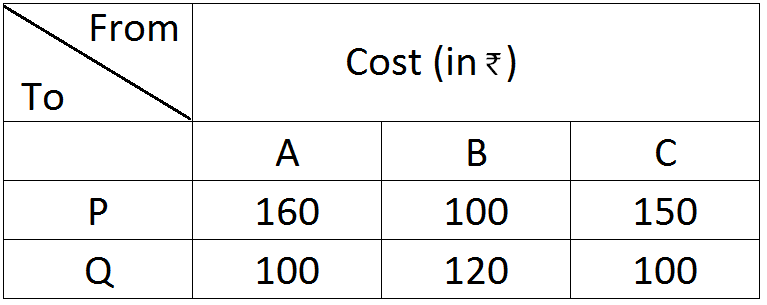
There are two factories located one at place P and the other at place Q. From these locations, a certain commodity is to be delivered to each of the three depots situated at A, B and C. The weekly requirements of the depots are respectively 5, 5 and 4 units of the commodity while the production capacity of the factories at P and Q are respectively 8 and 6 units. The cost of transportation per unit is given below:
How many units should be transported from each factory to each depot in order that the transportation cost is minimum. What will be the minimum transportation cost?
Two tailors, A and B earn Rs. 15 and Rs. 20 per day respectively. A can stitch 6 shirts and 4 pants while B can stitch 10 shirts and 4 pants per day. How many days shall each work if it is desired to produce (at least) 60 shirts and 32 pants at a minimum labour cost?
For the matrix $\text{A} = \begin{bmatrix}3&2\\1&1\end{bmatrix},$ find the numbers a and b such that $A^2 + aA + bI = 0.$
Evaluate the following integrals as limit of sum:
$\int\limits^{5}_{0}(\text{x}+1)\text{dx}$
The sum of the surface areas of a cuboid with sides $x , 2 x$ and $\frac{x}{3}$ and a sphere is given to be constant. Prove that the sum of their volumes is minimum, if $x$ is equal of three times the radius of sphere. Also, find the minimum value of the sum of their volumes.
Differentiate the following functions with respect to x:
$\frac{\sqrt{\text{x}^2+1}+\sqrt{\text{x}^2-1}}{\sqrt{\text{x}^2+1}-\sqrt{\text{x}^2-1}}$
Evaluvate the following intregals:
$\int\frac{1}{1-\tan\text{x}}\text{ dx}$
Find a unit vector perpendicular to each of the vectors $\vec{\text{a}}+\vec{\text{b}}$ and $\vec{\text{a}}-\vec{\text{b}},$ where $\vec{\text{a}}=3\hat{\text{i}}+2\hat{\text{j}}+2\hat{\text{k}}$ and $\vec{\text{b}}=\hat{\text{i}}+2\hat{\text{j}}-2\hat{\text{k}}.$
Two cards are drawn successively with replacement from well shuffled pack of 52 cards. Find the probability distribution of the number of kings.