MCQ
If the current is passed into the solution of an electrolyte
- ✓Anions move towards anode, cations towards cathode
- BAnions and cations both move towards anode
- CAnions move towards cathode, cations towards anode
- DNo movement of ions takes place
Generate a complete, print-ready paper with questions like this in minutes — across 16+ boards, with answer keys.
Which forms di-iodide on reaction with $HI $ (excess) ?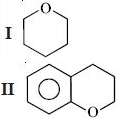

The direct reaction of xenon with fluorine leads to a series of compounds with oxidation numbers $+2,+4$ and $+6$ . XeF $4$ reacts violently with water to give $\mathrm{XeO}_3$. The compounds of xenon exhibit rich stereochemistry and their geometries can be deduced considering the total number of electron pairs in the valence shell.
$1.$ Argon is used in arc welding because of its
$(A)$ low reactivity with metal
$(B)$ ability to lower the melting point of metal
$(C)$ flammability
$(D)$ high calorific value
$2.$ The structure of $\mathrm{XeO}_3$ is
$(A)$ linear $(B)$ planar $(C)$ pyramidal $(D)$ $T$-shaped
$3.$ $\mathrm{XeF}_4$ and $\mathrm{XeF}_6$ are expected to be
$(A)$ oxidizing $(B)$ reducing $(C)$ unreactive $(D)$ strongly basic
Give the answer question $1,2$ and $3.$