Question
If the function $f(x)=\left\{\begin{array}{cc}\frac{\sin x^2}{x} ; & x \neq 0 \\ 0 ; & x=0\end{array}\right.$, is differentiable at $x=0$, then right hand derivative of $f(x)$ at $x=0$ is

Answer

(c) : At $x=0$, right hand derivative
$
\begin{aligned}
f^{\prime}(0) & =\lim _{h \rightarrow 0} \frac{f(0+h)-f(0)}{h} \\
& =\lim _{h \rightarrow 0} \frac{f(h)-f(0)}{h}=\lim _{h \rightarrow 0} \frac{\frac{\sin h^2}{h}-0}{h}=\lim _{h \rightarrow 0} \frac{\sin h^2}{h^2}=1
\end{aligned}
$

Need a full question paper?

Generate a complete, print-ready paper with questions like this in minutes — across 16+ boards, with answer keys.
Start Generating Free

Similar questions

The plane $2\text{x}-(1-\lambda)\text{y}+3\lambda\text{z}=0$ passes through the intersection of the planes:
The radius of a circle is increasing at the rate of 0.4 cm/ s. The rate of increasing of its circumference is:
  1. $0.4\pi\text{cm}/\text{ s}.$
  2. $0.8\pi\text{cm}/\text{ s}.$
  3. $0.8\text{cm}/\text{ s}.$
  4. $\text{None of these}$
If $A$ is a square matrix such that $A^2=A$, then $(I-A)^3+A$ is equal to
The equation $x^2- x - 2 = 0$ in three dimensional space is represented by:
 Z = 7x + y, subject to $ 5\text{x}+\text{y}\geq5,\text{x}+\text{y}\geq3,\text{x}\geq0, y\geq0.$ The minimum value of Z occurs at:
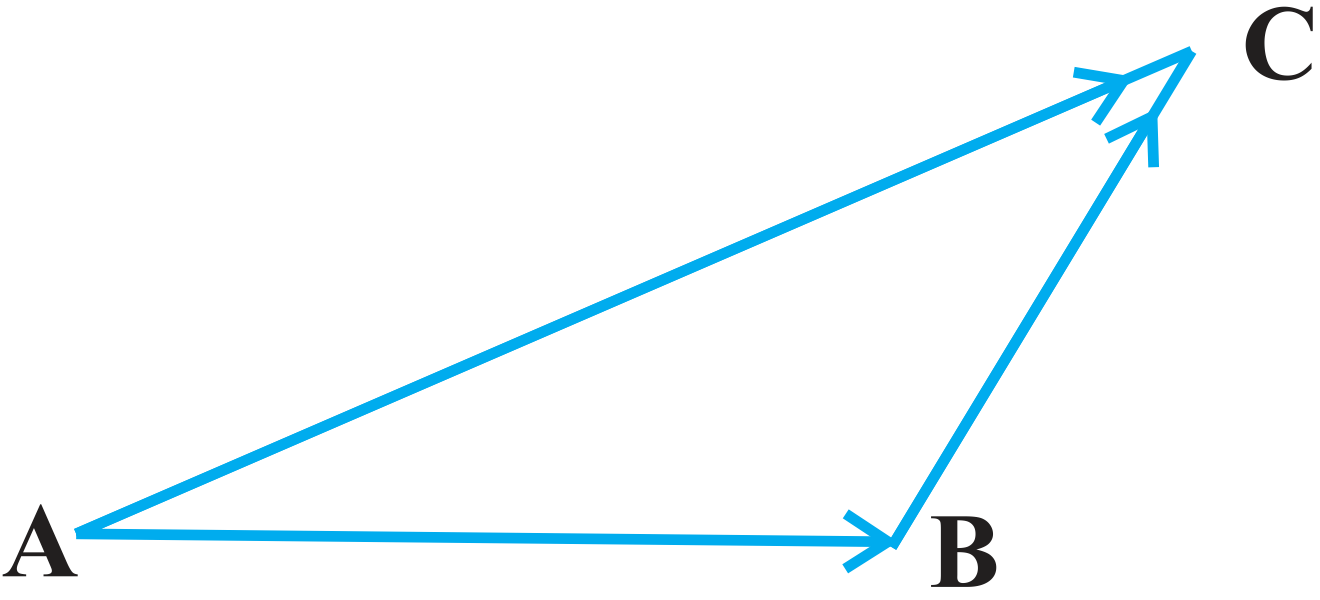
In triangle ABC (Fig 10.18), which of the following is not true:
  1. $\overrightarrow{\text{AB}}+\overrightarrow{\text{BC}}+\overrightarrow{\text{CA}}=\vec{0}$
  2. $\overrightarrow{\text{AB}}+\overrightarrow{\text{BC}}-\overrightarrow{\text{AC}}=\vec{0}$
  3. $\overrightarrow{\text{AB}}+\overrightarrow{\text{BC}}-\overrightarrow{\text{CA}}=\vec{0}$
  4. $\overrightarrow{\text{AB}}-\overrightarrow{\text{CB}}+\overrightarrow{\text{CA}}=\vec{0}$
If $P\left(\frac{A}{B}\right)=0.3, P(A)=0.4$ and $P(B)=0.8$, then $P\left(\frac{B}{A}\right)$ is equal to:
If $\theta$ is the angle between any two vectors $\vec{\text{a}}$ and $\vec{\text{b}},$ then $\big|\vec{\text{a}}.\vec{\text{b}}\big|=\big|\vec{\text{a}}\times\vec{\text{b}}\big|$ when $\theta$ is equal to:
  1. $0$
  2. $\frac{\pi}{4}$
  3. $\frac{\pi}{2}$
  4. $\pi$
The distance of point (3, 5, 7) from x axis is
If the corner points of the feasible region of an LPP are $(0,3),(3,2)$ and $(0,5)$, then the minimum value of $z=11 x+7 y$ is