MCQ
If the potential gradient of a wire decreases, then its length ______  
  • A
    remains constant
  • B
    decreases
  • increases
  • D
    none of the above

Answer

Correct option: C.
increases
If the potential gradient of a wire decreases, then its length increases.

Need a full question paper?

Generate a complete, print-ready paper with questions like this in minutes — across 16+ boards, with answer keys.
Start Generating Free

Similar questions

Two particles with their masses in the ratio $2: 3$ perform uniform circular motion with orbital radii in the ratio $3: 2$. If the centripetal force acting on them is the same, the ratio of their speeds is
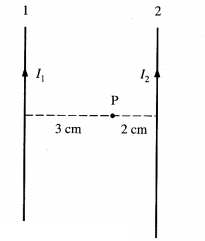
Two long, straight, parallel wires are $5 \ cm$ apart and carry currents $I_1$ and $I_2$ in the same direction. If $2I_1 = 3I_2,$ then at a point $P, 2 \ cm$ from wire $2,$Image ​​​​​​​
A particle executes SHM of type $x=A \sin \omega t$. It takes time $t_1$ from $x=0$ to $x=\frac{A}{2}$ and $t_2$ from $x=\frac{A}{2}$ to $x=A$. The ratio $t_1 ; t_2$ will be
The magnetic flux through a loop of resistance $10 \Omega$ is varying according to the relation $\phi=6 t^2+7 t+1$, where $\phi$ is in milliweber, time is in second then at time $t=1$ s the induced e.m.f. is
A particle performing S.H.M. starts from equilibrium position and its time period is 16 second. After 2 seconds its velocity is $\pi m / s$. Amplitude of oscillation is $\left(\cos 45^{\circ}=\frac{1}{\sqrt{2}}\right)$
At a given instant two vibrating particles in the same loop of a stationary wave have
In a diffraction pattern due to single slit of width ' $a$ ', the first minimum is observed at an angle $30^{\circ}$ when the light of wavelength 5400 Å  is incident on the slit. The first secondary maximum is observed at an angle of $\left(\sin 30^{\circ}=\frac{1}{2}\right)$
In photoelectric experiment the stopping potential was measured to be ' $V_1$ ' and ' $V_2$ ' volt with incident light of wavelength ' $\lambda$ ' and $\frac{\lambda}{2}$ respectively. The value of $V_2$ is $\left(\phi_0=\right.$ work function, $e=$ electronic charge)
If a capillary tube of radius $1 mm$ is immersed in water, the mass of water rising in the capillary tube is ' $m$ '. If the radius of the capillart tubeis doubled, then the mass of water that rises in the same capillary tube will be
When a planet in its orbit changes its distance from the Sun, which of the following remains constant?