Question

If two streams of protons move parallel to each other in the same direction, then they

(a) Do not exert any force on each other

(b) Repel each other

(c) Attract each other

(d) Get rotated to be perpendicular to each other

Answer

(b) Repel each other

Need a full question paper?

Generate a complete, print-ready paper with questions like this in minutes — across 16+ boards, with answer keys.

Start Generating Free

Similar questions

Two parallel plates separated by a distance of 5mm are kept at a potential difference of 50 V. A particle  of mass   and charge   enters in it with a velocity .  The acceleration of the particle will be

(a)  

(b)  

(c)

(d) 2 

The maximum focal length of the eye-lens of a person is greater than its distance from the retina. The eye is:

Excitation energy of a hydrogen like ion in its excitation state is 40.8 eV. Energy needed to remove the electron from the ion in ground state is:

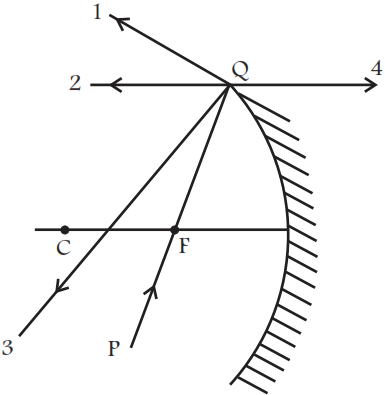
The direction of ray of light incident on a concave mirror is shown by PQ while directions in which the ray would travel after reflection is shown by four rays marked 1, 2, 3 and 4 (Fig). Which of the four rays correctly shows the direction of reflected ray?

In one average-life:
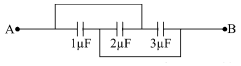
In the attached figure, the value of equivalence between points A and B will be:
Image

Angular width of central maxima in the Fraunhoffer diffraction pattern of a slit is measured. The slit is illuminated by light of wavelength 6000 Å. When the slit is illuminated by light of another wavelength, the angular width decreases by 30%. The wavelength of this light will be

(a) 6000 Å

(b) 4200 Å

(c) 3000 Å

(d) 1800 Å

The same mass of copper is drawn into two wires 1 mm and 2 mm thick. Two wires are connected in series and current is passed through them. Heat produced in the wire is in the ratio

(a) 2 : 1

(b) 1 : 16

(c) 4 : 1

(d) 16 : 1

The equation of a light wave is written as $\text{y}=\text{A}\ \sin(\kappa\text{x}-\omega\text{t}).$ Here, y represents:
  1. Displacement of either particles.
  2. Pressure in the medium.
  3. Density of the medium.
  4. Electric field.

A man cannot see clearly the objects beyond a distance of 20 cm from his eyes. To see distant objects clearly he must use which kind of lenses and of what focal length

(a) 100 cm convex

(b) 100 cm concave

(c) 20 cm convex

(d) 20 cm concave