MCQ
If $x = {2^{1/3}} - {2^{ - 1/3}},$ then $2{x^3} + 6x = $
  • A
    $1$
  • B
    $2$
  • $3$
  • D
    None of these

Answer

Correct option: C.
$3$
c
(c) $x = {2^{1/3}} - {2^{ - 1/3}}$

$ \Rightarrow $${x^3} = 2 - {2^{ - 1}} - {3.2^{1/3}}{.2^{ - 1/3}}({2^{1/3}} - {2^{ - 1/3}})$

$ \Rightarrow $${x^3} = 2 - {1 \over 2} - 3x$ ==> ${x^3} + 3x = {3 \over 2}$

$\therefore 2{x^3} + 6x = 3$.

Need a full question paper?

Generate a complete, print-ready paper with questions like this in minutes — across 16+ boards, with answer keys.
Start Generating Free

Similar questions

$\lim _{x \rightarrow 0} \frac{|\sin x|}{x}$ is equal to
On the parabola $y = x^2$, the point least distant from the straight line $y = 2x - 4$ is:
The mean and variance of $10$ observations were calculated as $15$ and $15$ respectively by a student who took by mistake $25$ instead of $15$ for one observation. Then, the correct standard deviation is$.....$
Define a sequence $\left\langle a_n\right\rangle$ by $a_1=5, a_n=a_1 a_2 \ldots a_{n-1}+4$ for $n > 1$. Then, $\lim _{n \rightarrow \infty} \frac{\sqrt{ a _n}}{ a _{n-1}}$
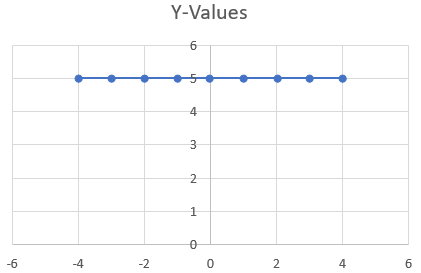
Which function is shown in graph?
Image
A person write 4 letters and addresses 4 envelopes. If the letters are placed in the envelopes at random, then the probability that all letters are not placed in the right envelopes, is
The curve describes parametrically by $x = t^2 - 2t + 2, y = t^2 + 2t + 2$  represents
If $a$ be the arithmetic mean of $b$ and $c$ and ${G_1},\;{G_2}$ be the two geometric means between them, then $G_1^3 + G_2^3 = $
The number of six letter words (with or without meaning), formed using all the letters of the word $'VOWELS',$ so that all the consonants never come together, is ... .
For non-negative integers $s$ and $r$, let

$\binom{s}{r}=\left\{\begin{array}{ll}\frac{s!}{r!(s-r)!} & \text { if } r \leq s \\ 0 & \text { if } r>s\end{array}\right.$

For positive integers $m$ and $n$, let

$(m, n) \sum_{ p =0}^{ m + n } \frac{ f ( m , n , p )}{\binom{ n + p }{ p }}$

where for any nonnegative integer $p$,

$f(m, n, p)=\sum_{i=0}^{ p }\binom{m}{i}\binom{n+i}{p}\binom{p+n}{p-i}$

Then which of the following statements is/are $TRUE$?

$(A)$ $(m, n)=g(n, m)$ for all positive integers $m, n$

$(B)$ $(m, n+1)=g(m+1, n)$ for all positive integers $m, n$

$(C)$ $(2 m, 2 n)=2 g(m, n)$ for all positive integers $m, n$

$(D)$ $(2 m, 2 n)=(g(m, n))^2$ for all positive integers $m, n$