MCQ
If $(x+y)^3-(x-y)^3-6 y\left(x^2-y^2\right)=k y^2$, then $k=$
  • A
    $1$
  • B
    $2$
  • C
    $4$
  • $8$

Answer

Correct option: D.
$8$
Let $x+y=A$ and $x-y=B$
Now, $(A-B)^3=A^3-B^3-3 A B(A-B)$
$\Rightarrow[(x+y)-(x-y)]^3=(x+y)^3-(x-y)^3-3(x+y)(x-y)[(x+y)-(x-y)]$
$=(x+y)^3-(x-y)^3-3\left(x^2-y^2\right)(2 y)$
$=(x+y)^3-(x-y)^3-6 y\left(x^2-y^2\right)$
But, $(x+y)^3-(x-y)^3-6 y\left(x^2-y^2\right)=k y^3$
$\Rightarrow[(x+y)-(x-y)]^3=(2 y)^3=k 8 y^3$
$\Rightarrow(2 y)^3=k y^3$
$\Rightarrow 8 y^3=k y^3$
$\Rightarrow k=8$
Hence, correct option is $(d).$

Need a full question paper?

Generate a complete, print-ready paper with questions like this in minutes — across 16+ boards, with answer keys.
Start Generating Free

Similar questions

Which of the following is not a criterion for congruence of triangles?
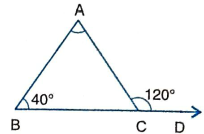
In Fig , $\angle A C D=120^{\circ}$ and $\angle A B C=40^{\circ}$, then $\angle B A C=$
Image
If $A B C$ and $D E F$ are two triangles such that $\triangle A B C \cong \triangle F D E$ and $A B=5 cm, \angle B=40^{\circ}$ and $\angle A=80^{\circ}$. Then, which of the following is true?
Write the correct answer in the following:
A grouped frequency distribution table with classes of equal sizes using $63-72$ ($72$ included) as one of the class is constructed for the following data:
$30, 32, 45, 54, 74, 78, 108, 112, 66, 76, 88, 40, 14, 20, 15, 35, 44, 66, 75, 84, 95, 96, 102, 110, 88, 74, 112, 14, 34, 44$. The number of classes in the distribution will be:
If the point $(3, 4)$ lies on the graph of $3y = ax + 6$, then the value of $'a'$ is:
Directions: In the following questions, the Assertions $(A)$ and Reason(s) $(R)$ have been put forward. Read both the statements carefully and choose the correct alternative from the following:
Assertion: $-25$ is not a rational number.
Reason : $-25$ can not be written in in the form of $\frac{\text{p}}{\text{q}}.$
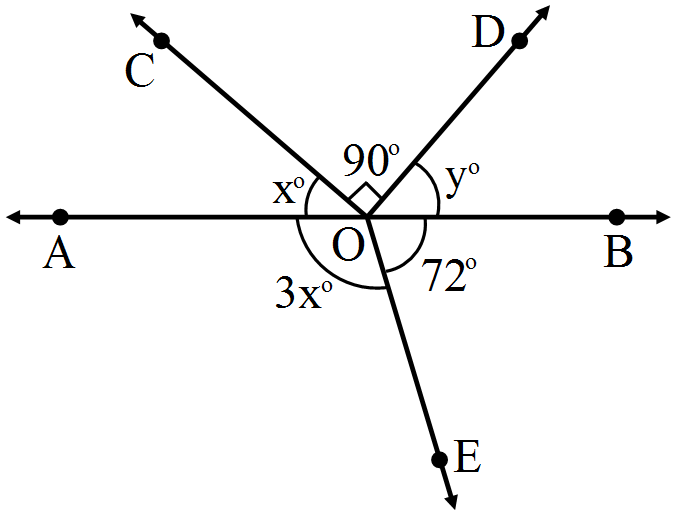
In the adjoining figure, what is the value of $y?$
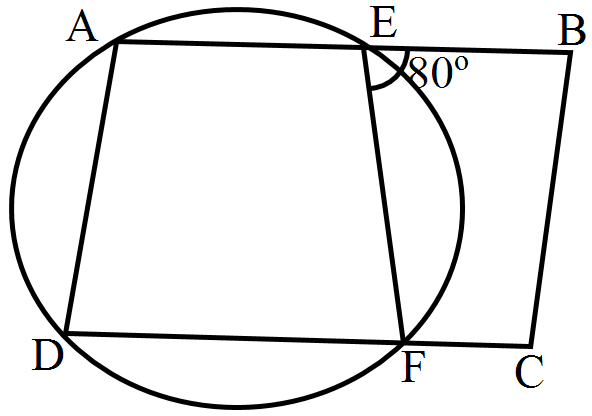
$ABCD$ is a parallelogram. $A$ circle passes through $A$ and $D$ and cuts $AB$ at $E$ and $DC$ at $F.$ If $\angle\text{BEF}=80^\circ,$ then $\angle\text{ABC}$ is equal to:
If $p(x) = x + 4$ then $p(x) + p(-x) = ?$
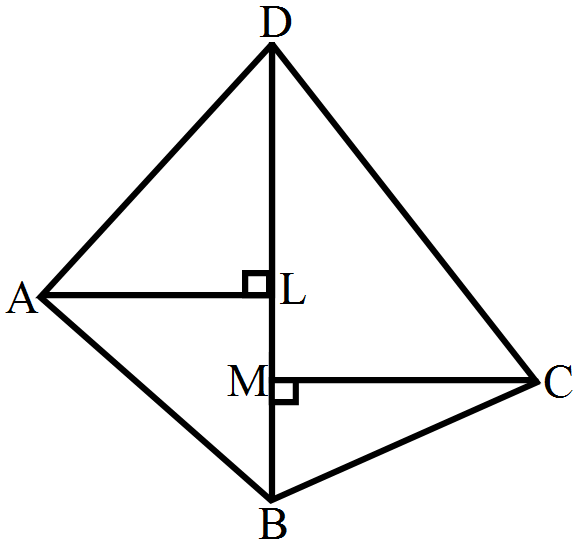
In a quadrilateral $A B C D$, it is given that $B D=16 \mathrm{~cm}$. If $\mathrm{AL} \perp \mathrm{BD}$ and $\mathrm{CM} \perp \mathrm{BD}$ such that $\mathrm{AL}=9 \mathrm{~cm}$ and $\mathrm{CM}=7 \mathrm{~cm}$, then ar(quadrilateral $A B C D)=$ ?