MCQ
If $y = x + e^x$ , then at $x = 1$ , $\frac{{{d^2}x}}{{d{y^2}}}$ is equal to
  • A
    $e$
  • $\frac{{ - e}}{{{{\left( {1 + e} \right)}^{^3}}}}$
  • C
    $\frac{{ - e}}{{\left( {1 + e} \right)}}$
  • D
    $\frac{{ - e}}{{{{\left( {1 + e} \right)}^2}}}$

Answer

Correct option: B.
$\frac{{ - e}}{{{{\left( {1 + e} \right)}^{^3}}}}$
b
$\frac{d y}{d x}=1+e^{x}$

$\Rightarrow \frac{d x}{d y}=\frac{1}{1+e^{x}}$

$\frac{{{d^2}x}}{{d{y^2}}} = \frac{d}{{dx}}\left( {\frac{1}{{1 + {e^x}}}} \right)\frac{{dx}}{{dy}}$

$ = \frac{{ - {e^x}}}{{{{\left( {1 + {e^x}} \right)}^2}}} \cdot \frac{1}{{\left( {1 + {e^x}} \right)}}$

${\left. {\therefore \frac{{{d^2}x}}{{d{y^2}}}} \right|_{x = 1}} =  - \frac{e}{{{{(1 + e)}^3}}}$

Need a full question paper?

Generate a complete, print-ready paper with questions like this in minutes — across 16+ boards, with answer keys.
Start Generating Free

Similar questions

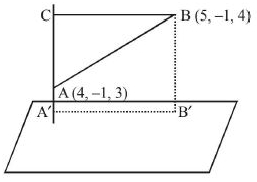
The length of the projection of the line segment joining the point  $\left( {5, - 1,4} \right)$ and $\left( {4, - 1,3} \right)$ on the plane $x + y + z = 7$ is :
If $a_n$ is the greatest term in the sequence $a _{ n }=\frac{ n ^3}{ n ^4+147}, n =1,2,3 \ldots \ldots$. , then $\alpha$ is equal to $..........$.
The integral $\int {\frac{{dx}}{{{{(x + 1)}^{\frac{3}{4}}}{{(x - 2)}^{\frac{5}{4}}}}}} $ is equal to
If $10 \sin ^{4} \theta+15 \cos ^{4} \theta=6$, then the value of $\frac{27 \operatorname{cosec}^{6} \theta+8 \sec ^{6} \theta}{16 \sec ^{8} \theta}$ is :
The vector $2\,i + j - k$ is perpendicular to $i - 4j + \lambda k,$ if $\lambda = $
The sum of the series : $(2)^2 + 2(4)^2 + 3(6)^2 + ...$ upto $10$ terms is
The acute angle between the line joining the points $(2,1,-3), (-3,1,7)$ and a line parallel to $\frac{{x - 1}}{3} = $ $\frac{y}{4} = \frac{{z + 3}}{5}$ through the point $(-1, 0, 4)$ is
$\frac{{\sin \theta }}{{1 - \cot \theta }} + \frac{{\cos \theta }}{{1 - \tan \theta }} = $
The equation of the line through the point $(0,1,2)$ and perpendicular to the line $\frac{x-1}{2}=\frac{y+1}{3}=\frac{z-1}{-2}$ is
Let $y=y(x)$ be the solution of the differential equation $\frac{d y}{d x}+\frac{\sqrt{2} y}{2 \cos ^{4} x-\cos 2 x}= Xe ^{\tan ^{-1}(\sqrt{2} \cot 2 x )}, 0 < x < \pi / 2$ with $y\left(\frac{\pi}{4}\right)=\frac{\pi^{2}}{32}$. If $y\left(\frac{\pi}{3}\right)=\frac{\pi^{2}}{18} e^{-\tan ^{-1}(\alpha)}$, then the value of $3 \alpha^{2}$ is equal to