MCQ
If $y = x + e^x$ then $\frac{{{d^2}x}}{{d{y^2}}}$ is :
  • A
    $e^x$
  • $ - \frac{{{e^x}}}{{{{\left( {1\, + \,{e^x}} \right)}^3}}}$
  • C
    $-\frac{{{e^x}}}{{{{\left( {1\, + \,{e^x}} \right)}^2}}}$
  • D
    $\frac{{ - 1}}{{{{\left( {1\, + \,{e^x}} \right)}^3}}}$

Answer

Correct option: B.
$ - \frac{{{e^x}}}{{{{\left( {1\, + \,{e^x}} \right)}^3}}}$
b
$y=x+e^{x}$

$d y / d x=1+e^{x}$

$\Rightarrow \quad \frac{d x}{d y}=\frac{1}{1+e^{x}}$

$\Rightarrow \quad \frac{d^{2} x}{d y^{2}}=\frac{-e^{x}}{\left(1+e^{x}\right)^{2}} \cdot \frac{d x}{d y}=\frac{-e^{x}}{\left(1+e^{x}\right)^{3}}$

Need a full question paper?

Generate a complete, print-ready paper with questions like this in minutes — across 16+ boards, with answer keys.
Start Generating Free

Similar questions

Consider the function. $f(x)=\left\{\begin{array}{cc} \frac{a\left(7 x-12-x^2\right)}{b\left|x^2-7 x+12\right|} & , x<3 \\ 2^{\frac{\sin (x-3)}{x-[x]}} & , x>3 \\ b & , x=3 \end{array}\right.$ Where $[\mathrm{x}]$ denotes the greatest integer less than or equal to $x$. If $S$ denotes the set of all ordered pairs $(a, b)$ such that $f(x)$ is continuous at $x=3$, then the number of elements in $\mathrm{S}$ is :
If $y = {\cos ^{ - 1}}\left( {{{3\cos x + 4\sin x} \over 5}} \right)$, then ${{dy} \over {dx}} = $
The length of the subnormal to the parabola ${y^2} = 4ax$ at any point is equal to
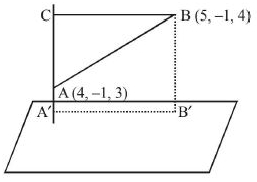
The length of the projection of the line segment joining the point  $\left( {5, - 1,4} \right)$ and $\left( {4, - 1,3} \right)$ on the plane $x + y + z = 7$ is :
If $A = \left[ \begin{array}{l}1\\2\\3\end{array} \right],$then $AA\ ' = $
Let $\vec{a}=2 \hat{i}+5 \hat{j}-\hat{k}, \vec{b}=2 \hat{i}-2 \hat{j}+2 \hat{k}$ and $\overrightarrow{ c }$ be three vectors such that $(\vec{c}+\hat{i}) \times(\vec{a}+\vec{b}+\hat{i})=\vec{a} \times(\vec{c}+\hat{i}) \cdot \vec{a} \cdot \vec{c}=-29$, then $\overrightarrow{ c } \cdot(-2 \hat{ i }+\hat{ j }+\hat{ k })$ is equal to :
For non-negative integers $s$ and $r$, let

$\binom{s}{r}=\left\{\begin{array}{ll}\frac{s!}{r!(s-r)!} & \text { if } r \leq s \\ 0 & \text { if } r>s\end{array}\right.$

For positive integers $m$ and $n$, let

$(m, n) \sum_{ p =0}^{ m + n } \frac{ f ( m , n , p )}{\binom{ n + p }{ p }}$

where for any nonnegative integer $p$,

$f(m, n, p)=\sum_{i=0}^{ p }\binom{m}{i}\binom{n+i}{p}\binom{p+n}{p-i}$

Then which of the following statements is/are $TRUE$?

$(A)$ $(m, n)=g(n, m)$ for all positive integers $m, n$

$(B)$ $(m, n+1)=g(m+1, n)$ for all positive integers $m, n$

$(C)$ $(2 m, 2 n)=2 g(m, n)$ for all positive integers $m, n$

$(D)$ $(2 m, 2 n)=(g(m, n))^2$ for all positive integers $m, n$

The total number of $3$-digit numbers, whose greatest common divisor with $36$ is $2$ , is
$arg\left( {\frac{{3 + i}}{{2 - i}} + \frac{{3 - i}}{{2 + i}}} \right)$ is equal to
In a certain population $10\%$ of the people are rich, $5\%$ are famous and $3\%$ are rich and famous. The probability that a person picked at random from the population is either famous or rich but not both, is equal to