MCQ
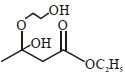
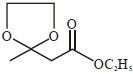
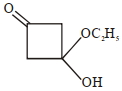
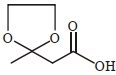
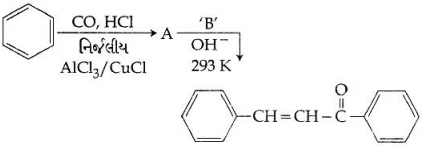
${image}$ The product $"A"$ in the above reaction is

  • A


  • C

  • D

Answer

Correct option: B.

b

Need a full question paper?

Generate a complete, print-ready paper with questions like this in minutes — across 16+ boards, with answer keys.

Start Generating Free

Similar questions

Consider the following sequence of reactions :

The substance $'B'$ is

Which of the following order is correct regarding boiling point ?
The oxidation states of nitrogen in $NO , NO _{2}, N _{2} O$ and $NO _{3}^{-}$ are in the order of :
Assertion: $CH_3COCl$ is converted to $CH_3CONH_2$ on reaction with $NH_3$.
Reason : $Cl$ is a stronger nucleophile and better leaving group
Chloropicrin is manufactured by the reaction between $C{l_2},\,\,NaOH$ and
Choose the incorrect option :
If 2 g NaOH is mixed in 250 gram of water, then the concentration of the solution will be:
  Column $-I$ (various
solutions)
  Column $-II$
(Their freezing
point )
$a$ $0.1\,M$ $BaCl_2$ solution $p$ $271\,K$
$b$ $0.1\,M$ $NaCl$ solution $q$ $270\,K$
$c$ $0.1\,M\, K_3 [Fe(CN)_6]$ solution $r$ $268\,K$
$d$ $0.1\,M\, Al_2 (SO_4)_3$ solution $s$ $269\,K$

Given : Freezing point of $0.1\,M$ sucrose solution $= 272\,K$ and $F.pt.$ of water $= 273\,K$ 

Which of the following option show correct matches ?

$\begin{array}{*{20}{c}}
  {\begin{array}{*{20}{c}}
  {CH = O\,\,\,\,\,\,\,\,\,\,} \\ 
  {|\,\,\,\,\,\,\,\,\,\,\,\,\,\,\,\,\,\,\,\,\,\,\,\,\,} 
\end{array}} \\ 
  {{{(CH - OH)}_4}} \\ 
  {\,\,\,|\,\,\,\,\,\,\,\,\,\,\,\,\,\,\,\,\,\,\,\,\,\,\,\,\,\,} \\ 
  {C{H_2} - OH} 
\end{array}$ $\xrightarrow{{B{r_2}/{H_2}O}}P$ ; $P$ is
Complete reaction of acetaldehyde with excess formaldehyde, upon heating with conc. $NaOH$ solution, gives $P$ and $Q$. Compound $P$ does not give Tollens' test, whereas $Q$ on acidification gives positive Tollens' test. Treatment of $P$ with excess cyclohexanone in the presence of catalytic amount of $p$-toluenesulfonic acid (PTSA) gives product $R$.

Sum of the number of methylene groups $\left(- CH _2-\right.$ ) and oxygen atoms in $R$ is. . . .