Question

In a diffraction pattern by a wire, on increasing diameter of wire, fringe width

(a) Decreases

(b) Increases

(c) Remains unchanged

(d) Increasing or decreasing will depend on wavelength

Answer

(a) Decreases

Need a full question paper?

Generate a complete, print-ready paper with questions like this in minutes — across 16+ boards, with answer keys.

Start Generating Free

Similar questions

In a photo cell, the photo-electrons emission takes place

(a) After 10–1 sec on incident of light rays

(b) After 10–3 sec on incident of light rays

(c) After 10–6 sec on incident of light rays

(d) After 10–8 sec on incident of light rays

In YDSE, the slit widths are in the ratio of 1:9. The ratio of intensity of the maxima to that of the minima is:
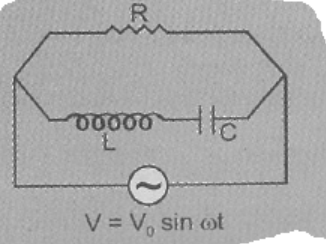
The Current in resistance R at resonance is.
Image
The electric potential inside a conducting sphere:

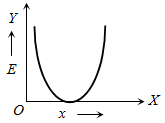
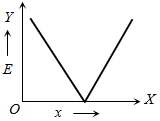
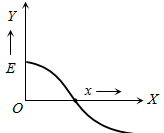
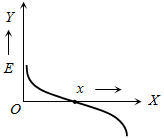
Two identical point charges are placed at a separation of d. P is a point on the line joining the charges, at a distance x  from any one charge. The field at P is E, E is plotted against x for values of x from close to zero to slightly less than d. Which of the following represents the resulting curve

(a)

(b)

(c)

(d)

A particle A has charge +q and a particle B has charge +4q with each of them having the same mass m. When allowed to fall from rest through the same electric potential difference, the ratio of their speed   will become

(a) 2 : 1   

(b) 1 : 2

(c) 1 : 4    

(d) 4 : 1

If the cathode–anode potential difference in an X-ray tube be 105 V, then the maximum energy of X-ray photon can be

(a) 105 J  

(b) 105 MeV

(c) 10–1 MeV

(d) 105 KeV

The distance of the eye-lens from the retina is x. For a normal eye, the maximum focal length of the eye-lens:
  1. = x.
  2. < x.
  3. > x.
  4. = 2x.

The phenomenon of radioactivity is

(a) Exothermic change which increases or decreases with temperature

(b) Increases on applied pressure

(c) Nuclear process does not depend on external factors

(d) None of the above

64 drops each having the capacity C and potential V are combined to form a big drop. If the charge on the small drop is q, then the charge on the big drop will be

(a) 2q

(b) 4q

(c) 16q

(d) 64q