MCQ
In a diffraction pattern by a wire, on increasing diameter of wire, fringe width
  •  Decreases
  • B
     Increases
  • C
     Remains unchanged
  • D
    Increasing or decreasing will depend on wavelength

Answer

Correct option: A.
 Decreases
Decreases

Need a full question paper?

Generate a complete, print-ready paper with questions like this in minutes — across 16+ boards, with answer keys.
Start Generating Free

Similar questions

The wavelength of sodium light in air is $5890 \mathring A$. The velocity of light in air is $3 \times 10^8 ms^{-1}$. The wavelength of light in a glass of refractive index 1.6 would be close to
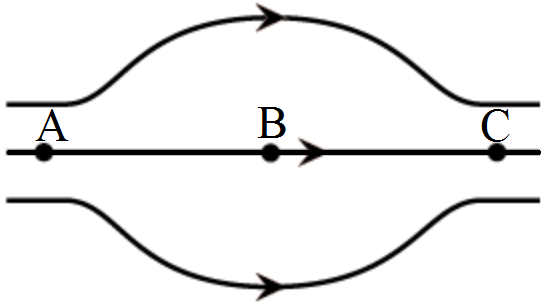
Figure, shows some of the electric field lines corresponding to an electric field. The figure suggests that,
Assertion : The number of electrons in a P-type silicon semiconductor is less than the number of electrons in a pure silicon semiconductor at room temperature.
Reason : It is due to law of mass action.
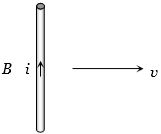
A conducting wire is moving towards right in a magnetic field $B$. The direction of induced current in the wire is shown in the figure. The direction of magnetic field will be
Polarising angle for water is 53°4'. If light is incident at this angle on the surface of water and reflected, the angle of refraction is
Refractive index of glass is $\frac{3}{2}$ and refractive index of water is $\frac{4}{3}$. If the speed of light in glass is $2.00 \times {10^8} m/s,$ the speed in water will be
The half life period of radium is $1600$ years. The fraction of a sample of radium that would remain after $6400$ years is
Two wires of resistance $\mathrm{R}_1$ and $\mathrm{R}_2$ have temperature coefficient of resistance $\alpha_1$ and $\alpha_2$, respectively. These are joined in series. The effective temperature coefficient of resistance is
In a circuit with a coil of resistance $2\, \Omega$, the magnetic flux changes from $2.0\, Wb$ to $10.0 \,Wb$ in $0.2$ second. The charge that flows in the coil during this time is..........$coulomb$
If the number of electric lines of force emerging out of a closed surface is $1000$ , then the charge enclosed by the surface is .......... $C$