MCQ
In a homogeneous mixture,
  • A
    the components do not mix with each other and its composition is uniform throughout.
  • the components completely mix with each other and its composition is uniform throughout.
  • C
    the components completely mix with each other and its composition is not uniform throughout.
  • D
    the components do not mix with each other and its composition is not uniform throughout.

Answer

Correct option: B.
the components completely mix with each other and its composition is uniform throughout.
(b) the components completely mix with each other and its composition is uniform throughout.
Explanation: Its a basic criteria of a homogeneous mixture.
i. The components get mixed up uniformly throughout the mixture.
ii. Its individual parts are not easily identifiable.
iii. It has same proportions of its components through out the sample.

Need a full question paper?

Generate a complete, print-ready paper with questions like this in minutes — across 16+ boards, with answer keys.

Start Generating Free

Similar questions

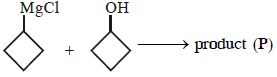
compound $P$ is
Carbon-carbon double bond in alkenes consists of:
An ideal gas is allowed to expand both reversibly and irreversibly in an isolated system. If $T_i$ is the initial temperature and $T_f$ is the final temperature, which of the following statements is correct ?
$2 \mathrm{HI} \rightleftharpoons \mathrm{H}_2+\mathrm{I}_2$ The equilibrium constant of the above reaction is $6.4$ at $300K$. If $0.25$ mole each of $\ce{H_2}$ and $\ce{I_2}$​ are added to the system, the equilibrium constant will be :
The hydride ion ${H^ - }$is stronger base than its hydroxide ion $O{H^ - }.$ Which of the following reaction will occur if sodium hydride $(NaH)$ is dissolved in water
Identify the pair of binary corresponds in which nitrogen exhibits the lowest and the highest oxidation state.
Hess’s law deals with :
In neutral or faintly alkaline solution, $8$ moles of permanganate anion quantitatively oxidize thiosulphate anions to produce $X$ moles of a sulphur containing product. The magnitude of $X$ is
Match List$-I$ with List$-II :$

List$-I$

(Species)

List$-II$

(Hybrid Orbitals)

$(a)$ $\mathrm{SF}_{4}$ $(i)$ $\mathrm{sp}^{3} \mathrm{~d}^{2}$
$(b)$ $\mathrm{IF}_{5}$ $(ii)$ $\mathrm{d}^{2} \mathrm{sp}^{3}$
$(c)$ $\mathrm{NO}_{2}^{+}$ $(iii)$ $\mathrm{sp}^{3} \mathrm{~d}$
$(d)$ $\mathrm{NH}_{4}^{+}$ $(iv)$ $\mathrm{sp}^{3}$
  $(v)$ $\mathrm{sp}$

Choose the correct answer form the options given below :

Which of the following set of molecules will have zero dipole moment$?$