MCQ
In a junction diode, the holes are due to
  • A
    Protons
  • B
    Neutrons
  • C
    Extra electrons
  • Missing of electrons

Answer

Correct option: D.
Missing of electrons
d
(d) In a junction diode, the free electrons combine with a hole and gets converted into a valence electron. Now the thermal energy breaks this electron-hole pair in the depletion layer, the electron drifts to the $n-type$ region leaving behind the hole which drifts to the $p-type$ region.

Need a full question paper?

Generate a complete, print-ready paper with questions like this in minutes — across 16+ boards, with answer keys.
Start Generating Free

Similar questions

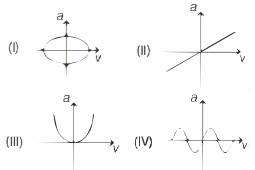
If the speed $v$ of the bob in a simple pendulum is plotted against the tangential acceleration $a$, the correct graph will be represented by
Round off the value $2.845$ to three significant figures.
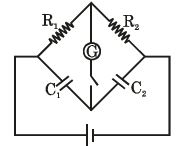
Circuit shown is in steady state, now when switch is closed, galvanometer shows no deflection, then correct relation is
A cylindrical rod having temperature ${T_1}$ and ${T_2}$ at its ends. The rate of flow of heat is ${Q_1}$ $cal/sec$. If all the linear dimensions are doubled keeping temperature constant then rate of flow of heat ${Q_2}$ will be
The motion of planets in the solar system is an example of the conservation of
A closed hollow insulated cylinder is filled with gas at ${0^o}C$ and also contains an insulated piston of negligible weight and negligible thickness at the middle point. The gas on one side of the piston is heated to ${100^o}C.$ If the piston moves $5\,cm,$ the length of the hollow cylinder is ..... $cm$
In a $CE$ transistor amplifier, the audio signal voltage across the collector resistance of $2\,k\Omega $ is $2\,V$. If the base resistance is $1\,k\Omega $ and the current amplification of the transistor is $100$, the input signal voltage is
A solid sphere of radius $R$ and density $\rho$ is attached to one end of a mass-less spring of force constant $k$. The other end of the spring is connected to another solid sphere of radius $R$ and density $3 p$. The complete arrangement is placed in a liquid of density $2 p$ and is allowed to reach equilibrium. The correct statement$(s)$ is (are)

$(A)$ the net elongation of the spring is $\frac{4 \pi R^3 \rho g}{3 k}$

$(B)$ the net elongation of the spring is $\frac{8 \pi R^3 \rho g}{3 k}$

$(C)$ the light sphere is partially submerged.

$(D)$ the light sphere is completely submerged.

The frequency of the first harmonic of a string stretched between two points is $100 Hz$. The frequency of the third overtone is  ... $Hz$
In photoelectric emission process from a metal of work function $1.8\, eV,$ the kinetic energy of most energetic electrons is $0.5\, eV.$ The corresponding stopping potential is  ......... $V$