Question
In a wave, the path difference corresponding to a phase difference of f is
|
(a) |
(b) |
(c) |
(d) |
In a wave, the path difference corresponding to a phase difference of f is
|
(a) |
(b) |
(c) |
(d) |
(c) 
Generate a complete, print-ready paper with questions like this in minutes — across 16+ boards, with answer keys.
The mutual characteristic curves of a triode are as shown in figure. The cut off voltage for the triode is
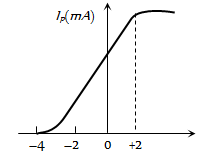
| (a) 0 V | (b) 2 V | (c) – 4 V | (d) 6 V |
| A | B | Y |
| 0 | 0 | 0 |
| 0 | 1 | 1 |
| 1 | 0 | 1 |
| 1 | 1 | 1 |
The materials suitable for making electromagnets should have
|
(a) High retentivity and high coercivity |
(b) Low retentivity and low coercivity |
|
(c) High retentivity and low coercivity |
(d) Low retentivity and high coercivity |
Assertion : A red object appears dark in the yellow light
Reason : A red colour is scattered less
|
(a) If both assertion and reason are true and the reason is the correct explanation of the assertion. |
|
(b) If both assertion and reason are true but reason is not the correct explanation of the assertion. |
|
(c) If assertion is true but reason is false. |
|
(d) If the assertion and reason both are false. |


