MCQ
In an elastic collision:
  • A
    The kinetic energy remains constant.
  • B
    The linear momentum remains constant.
  • C
    The final kinetic energy is equal to the initial kinetic energy.
  • D
    The final linear momentum is equal to the initial linear momentum.

Answer

  1. The linear momentum remains constant.
  2. The final kinetic energy is equal to the initial kinetic energy.
  3. The final linear momentum is equal to the initial linear momentum.

Explanation:

During an elastic collision, all of the above statements are valid.

Need a full question paper?

Generate a complete, print-ready paper with questions like this in minutes — across 16+ boards, with answer keys.
Start Generating Free

Similar questions

Two particles move on a circular path (one just inside and the other just outside) with angular velocities $\omega$ and $5\omega$ starting from the same point. Then
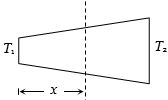
Radius of a conductor increases uniformly from left end to right end as shown in fig.Material of the conductor is isotropic and its curved surface is thermally isolated from surrounding. Its ends are maintained at temperatures $T_1$ and $T_2$ ($T_1$ > $T_2$): If, in steady state, heat flow rate is equal to $H$ , then which of the following graphs is correct
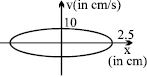
The figure shows a graph between velocity and displacement (from mean position) of a particle performing $SHM\,:$
As observed from earth, the sun appears to move in an approximate circular orbit. For the motion of another planet like mercury as observed from earth, this would.
Speed of a transverse wave on a straight wire (mass $6.0\; \mathrm{g}$, length $60\; \mathrm{cm}$ and area of cross-section $1.0\; \mathrm{mm}^{2}$ ) is $90\; \mathrm{ms}^{-1} .$ If the Young's modulus of wire is $16 \times 10^{11}\; \mathrm{Nm}^{-2},$ the extension of wire over its natural length is
A mass $m$ is suspended from the two coupled springs connected in series. The force constant for springs are ${K_1}$ and ${K_2}$. The time period of the suspended mass will be
In a closed organ pipe the frequency of fundamental note is $50 Hz$. The note of which of the following frequencies will not be emitted by it .... $Hz$
Water $\left(\rho=1000 \,kg / m ^3\right)$ and kerosene $\left(\sigma=800 \,kg / m ^3\right)$ are filled in two identical cylindrical vessels. Both vessels have small holes at their bottom. The speed of the water and kerosene coming out of their holes are $v_1$ and $v_2$ respectively. Select the correct alternative
The escape speed of a projectile on the earth's surface is $11.2\; km s ^{-1} .$ A body is projected out with thrice this speed. What is the speed (in $km/s$) of the body far away from the earth? Ignore the presence of the sun and other planets.
Consider the quantities, pressure, power, energy, impulse, gravitational potential, electrical charge, temperature, area. Out of these, the only vector quantities are
  1. Impulse, pressure and area.
  2. Impulse and area.
  3. Area and gravitational potential.
  4. Impulse and pressure.