Question
In an $LR$ -circuit, time constant is that time in which current grows from zero to the value (where ${I_0}$ is the steady state current)

Answer

(a) Current at any instant of time $t$ after closing an $L-R$ circuit is given by $I = {I_0}\left[ {1 - {e^{\frac{{ - R}}{L}t}}} \right]$ Time constant  $t = \frac{L}{R}$

$\therefore \,\,I = {I_0}\left[ {1 - {e^{\frac{{ - R}}{L} \times \frac{L}{R}}}} \right] = {I_0}\,(1 - {e^{ - 1}}) = {I_0}\,\left( {1 - \frac{1}{e}} \right)$.

$ = {I_0}\,\left( {1 - \frac{1}{{2.718}}} \right) = 0.63{I_0} = 63\% $ of ${I_0}$

Need a full question paper?

Generate a complete, print-ready paper with questions like this in minutes — across 16+ boards, with answer keys.
Start Generating Free

Similar questions

When a particle moves in a uniform circular motion. It has
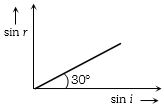
When light is incident on a medium at angle i and refracted into a second medium at an angle $ r$, the graph of $sin\, i $ vs $sin\,r $ is as shown in the graph. From this, one can conclude that
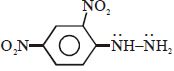
Which of the following reacts with the given compound to give orange precipitate
Monochromatic light with a frequency well above the cutoff frequency is incident on the emitter in a photoelectric effect apparatus. The frequency of the light is then doubled while the intensity is kept constant. How does this affect the photoelectric current?
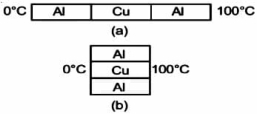
The three rods shown in figure have identical dimensions. Heat flows from the hot end at a rate of $40 \,W$ in the arrangement $(a)$. Find the rates of heat flow when the rods are joined as in arrangement $(b)$ is ......... $W$ (Assume $K_al=200 \,W / m ^{\circ} C$ and $\left.K_{c u}=400 \,W / m ^{\circ} C \right)$
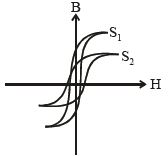
The $B-H$ curves $S_1$ and $S_2$ in the adjoining figure are associated with 
$X-$ rays were discovered by
A point charge $Q\left(=3 \times 10^{-12} C \right)$ rotates uniformly in a vertical circle of radius $R(=1 \,mm )$. The axis of the circle is aligned along the magnetic axis of the earth. At what value of the angular speed $\omega$, the eff ective magnetic field at the centre of the circle .............. $rad / s$ will be reduced to zero? (Horizontal component of earth's magnetic field is $30 \,\mu T )$
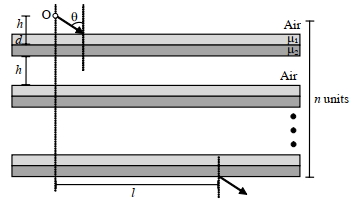
Consider a configuration of $n$ identical units, each consisting of three layers. The first layer is a column of air of height $h=\frac{1}{3} cm$, and the second and third layers are of equal thickness $d=\frac{\sqrt{3}-1}{2} cm$, and refractive indices $\mu_1=\sqrt{\frac{3}{2}}$ and $\mu_2=\sqrt{3}$, respectively. A light source $O$ is placed on the top of the first unit, as shown in the figure. A ray of light from $O$ is incident on the second layer of the first unit at an angle of $\theta=60^{\circ}$ to the normal. For a specific value of $n$, the ray of light emerges from the bottom of the configuration at a distance $l=\frac{8}{\sqrt{3}} cm$, as shown in the figure. The value of $n$ is. . . . . 
Sand is being dropped from a stationary dropper at a rate of $0.5\,kgs ^{-1}$ on a conveyor belt moving with a velocity of $5\,ms ^{-1}$. The power needed to keep belt moving with the same velocity will be.