MCQ
In Bainbridge mass spectrograph a potential difference of $1000\ V$ is applied between two plates distant $1 \ cm$ apart and magnetic field in $B = 1T.$ The velocity of undeflected positive ions in $m/s$ from the velocity selector is
  • A
    $10^7 \mathrm{~m} / \mathrm{s}$
  • B
    $10^4 \mathrm{~m} / \mathrm{s}$
  • $10^5 \mathrm{~m} / \mathrm{s}$
  • D
    $10^2 \mathrm{~m} / \mathrm{s}$

Answer

Correct option: C.
$10^5 \mathrm{~m} / \mathrm{s}$

Need a full question paper?

Generate a complete, print-ready paper with questions like this in minutes — across 16+ boards, with answer keys.

Start Generating Free

Similar questions

Two identical charges q are placed at a distance d from each other. The potential at a point situated at a distance between them will be:
The desirable properties for making permanent magnets are:
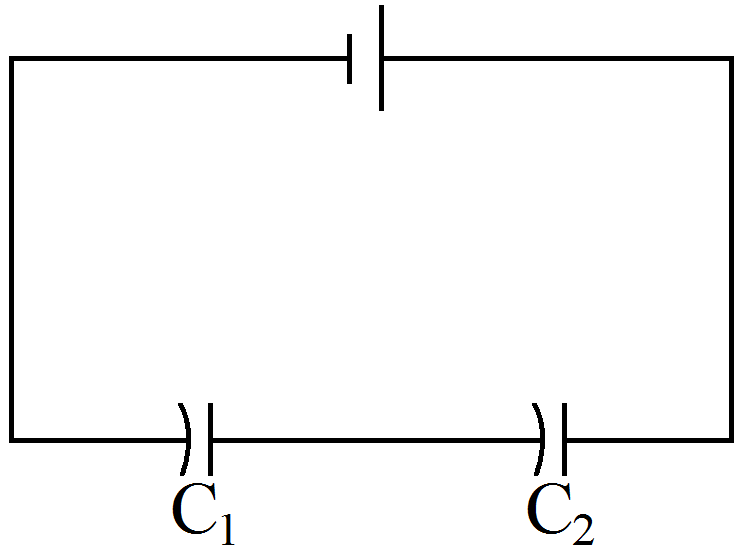
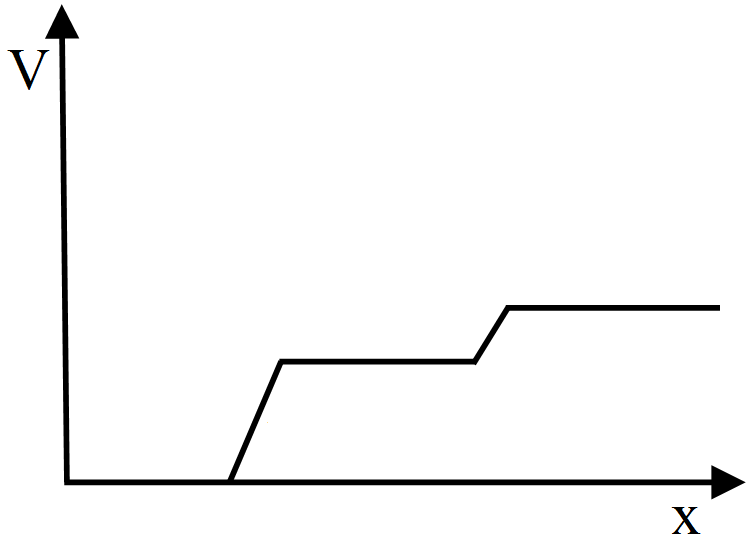
Figure shows two capacitors connected in series and joined to a battery. The graph shows the variation in potential as one moves from left to right on the branch containing the capacitors:

A rectangular coil of $300$ turns has an average area of average area of $25 \mathrm{~cm} \times 10 \mathrm{~cm}$. The coil rotates with a speed of $50 \ cps$ in a uniform magnetic field of strength $4\times 10^{-2} \mathrm{~T}$ about an axis perpendicular of the field. The peak value of the induced $e.m.f.$ is $($in volt$)$
Which conservation law is obeyed in Einstein's photoelectric equation?
In Bohr’s model, if the atomic radius of the first orbit is $r_o$ , then the radius of the fourth orbit is
A point charge q is rotated along a circle in the electric field generated by another point charge Q. The work done by the electric field on the roatating charge in one complete revolution is:
  1. Zero.
  2. Positive.
  3. Negative.
  4. Zero if the charge Q is at the centre and nonzero otherwise.
Two point charges 10C and -10C are placed at a certain distance. What is the electric potential of their midpoint?
A graph is plotted between the potential difference (applied across the ends of a conductor) and the current (following through the conductor). The graph is a straight line
If threshold wavelength for sodium is 6800Å then the work function will be(a) 1.8 eV (b) 2.5 eV(c) 2.1 eV (d) 1.4 eV