Question
In image formation from spherical mirrors, only paraxial rays are considered because they:

Answer

  1. Form nearly a point image of a point source.
Explanation:
In Image formation from spherical mirrors, only paraxial rays are considered because they form nearly a point Image of a point source. Angle of Incidence of Paraxial rays is very small.

Need a full question paper?

Generate a complete, print-ready paper with questions like this in minutes — across 16+ boards, with answer keys.
Start Generating Free

Similar questions

Which of the following is not a consequence of Gauss’s law?
In an electron gun the control grid is given a negative potential relative to cathode in order to (a) Decelerate electrons(b) Repel electrons and thus to control the number of electrons passing through it(c) To select electrons of same velocity and to converge them along the axis(d) To decrease the kinetic energy of electrons


Work of electric motor is(a) To convert ac into dc(b) To convert dc into ac(c) Both (a) and (b)(d) To convert ac into mechanical work
   
   
Angle between equipotential surface and lines of force is (a) Zero(b) 180° (c) 90°(d) 45°
       
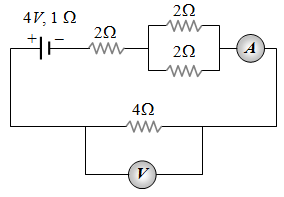
What is the equivalent resistance of the circuit
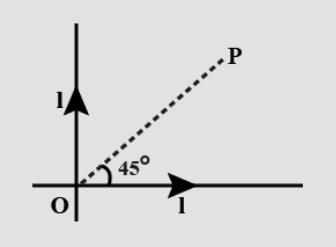
Two infinite long wires, each carrying current I, are lying along x - axis and y - axis, respectively. A charged particle, having a charge q and mass m, is projected with a velocity u along the straight line OP. The path of the particle is (neglect gravity) a:
A magnet freely suspended in a vibration magnetometer makes $10$ oscillations per minute at a place $A$ and $20$ oscillations per minute at a place $B$. If the horizontal component of earth’s magnetic field at $A$ is $36 \times 10^{-6}T$ , then its value at $B$ is
The half-life of a radioactive substance is 3.6 days. How much of 20 mg of this radioactive substance will remain after 36 days(a) 0.0019 mg(b) 1.019 mg(c) 1.109 mg(d) 0.019 mg
       
Unit of electromotive force :
Which of the transitions in hydrogen atom emits a photon of lowest frequency  (n = quantum number)(a) n = 2 to n = 1(b) n = 4 to n = 3(c) n = 3 to n = 1(d) n = 4 to n = 2