Question
In long range transmission, why micro waves are better carrier than radio waves?

Answer

In long range transmission, micro waves are better carrier than radio waves because their wavelength is very less as compared to radio waves. Due to this, during obstruction, they suffer minimum deviation and can be sent directly towards the aim.

Need a full question paper?

Generate a complete, print-ready paper with questions like this in minutes — across 16+ boards, with answer keys.

Start Generating Free

Similar questions

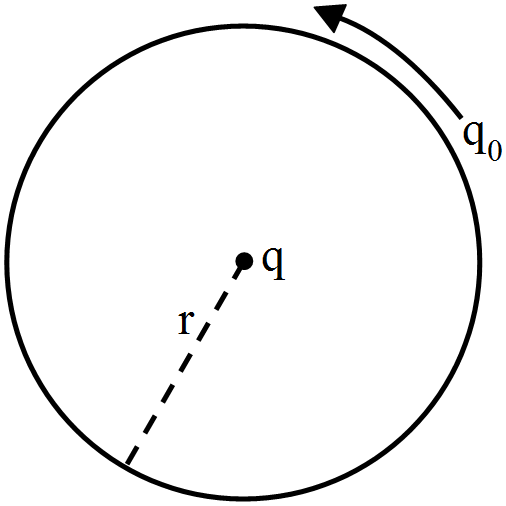
If a point charge is rotated in an arc of radius r around a charge q, what will be the work done? Explain.

In a transistor, doping level in base is increased slightly. How will it affect (i) collector current and (ii) base current?
Why cannot we use Si and Ge in fabrication of visible LEDs?
What is the relationship between the radius R of a nucleus and the mass number (A) of an atom?
When a semiconducting material is doped with an impurity, new acceptor levels are created. In a particular thermal collision, a valence electron receives an energy equal to 2kT and just reaches one of the acceptor levels. Assuming that the energy of the electron was at the top edge of the valence band and that the temperature T is equal to 300K, find the energy of the acceptor levels above the valence band.
An electric bulb is hanging over a table at a height of 1m above it. The illuminance on the table directly below the bulb is 40 lux. The illuminance at a point on the table 1m away from the first point will be about:
  1. 10 lux
  2. 14 lux
  3. 20 lux
  4. 28 lux
When the size of a soap bubble is increased by pushing more air in it, the surface area increases. Does it mean that the average separation between the surface molecules is increased?
One of your friends argues that he has read in the previous chapters that there can be no electric field inside a conductor. And hence there can be no current through it. What is the fallacy of this argument?
Can a photon be deflected by an electric field? By a magnetic field?
A converging lens of focal length 12cm and a diverging mirror of focal length 7.5cm are placed 5.0cm apart with their principal axes coinciding. Where should an object be placed so that its image falls on itself?