Question
In periodic table how reactivity of elements get changed ?

Answer

In a period, the chemical reactivity of the elements of the first group is very high, it decreases after reaching the middle and after reaching group 17 , it increases again and becomes very high. Similarly, in a group of common elements (e.g. alkali metals) the reactivity increases from top to bottom, whereas in a group of non-metals (e.g. halogen family) the reactivity decreases from top to bottom.

Need a full question paper?

Generate a complete, print-ready paper with questions like this in minutes — across 16+ boards, with answer keys.
Start Generating Free

Similar questions

The size of weather balloon becomes larger and larger as it ascends up into higher altitudes. Why?
Arrange the following in increasing order of Lewis acid character:
$\mathrm{BF}_3, \mathrm{BFI}_3, \mathrm{BBr}_3 \text { and } \mathrm{BI}_3$
What will be the mass of one atom of C-12 in grams?
In $2 1 4 . 2 \mathrm { gm } \text { of aqueous solution of } 3 4 . 2$ gm sugar is present. Calculate mole fraction of sugar.
Critical temperatures of ammonia and carbon dioxide are 405.5K and 304.10K respectively. Which of these gases will liquefy first when you start cooling from500K to their critical temperature.
$N _2$ have bond order 3 and it is diamagnetic. Explain this on basis of MOT.
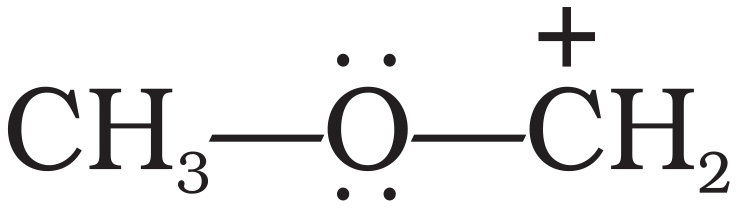
“Stability of carbocations depends upon the electron releasing inductive effect of groups adjacent to positively charged carbon atom involvement of neighbouring groups in hyperconjugation and resonance.”
Draw the possible resonance structures for and predict which of the structures is more stable. Give reason for your answer.
A 1.25 g sample of octane $\left(\mathrm{C}_8 \mathrm{H}_{18}\right)$ is burnt in excess of oxygen in a bomb calorimeter. The temperature of calorimeter rises from 294.05 to 300.78 K . If heat capacity of the calorimeter is 8.93 kJ K . Find heat transferred to calorimeter.
The density of gas is $1.964 \mathrm{~g} \mathrm{~L}^{-1}$ at 273 K and 76 cm Hg . Calculate molar mass of the gas. $\left[\mathrm{R}=0.082 \mathrm{~L} \mathrm{~atm} \mathrm{~K}^{-1} \mathrm{~mol}^{-1}\right]$
Why is anode called oxidation electrode, whereas cathode is called reduction electrode?