MCQ
In silicon dioxide
  • Each silicon atom is surrounded by four oxygen atoms and each oxygen atom is bonded to two silicon atoms
  • B
    Each siliocn atom is surrounded by two oxygen atoms and each oxygen atom is bounded to two silicon atoms
  • C
    Silicon atom is bonded to two oxygen atoms
  • D
    There are double bonds between silicon and oxygen atoms
Answer

Correct option: A.
Each silicon atom is surrounded by four oxygen atoms and each oxygen atom is bonded to two silicon atoms
a
(a) $ - O - \mathop {\mathop {\mathop {\mathop {\mathop {\mathop {Si}\limits_| }\limits_O }\limits_| }\limits^| }\limits^O }\limits^| - O - \mathop {\mathop {\mathop {\mathop {\mathop {\mathop {Si}\limits_| }\limits_O }\limits_| }\limits^| }\limits^O }\limits^| - O - $

Need a full question paper?

Generate a complete, print-ready paper with questions like this in minutes — across 16+ boards, with answer keys.

Start Generating Free

Similar questions

A solution of $MgC{l_2}$ in water has $pH$
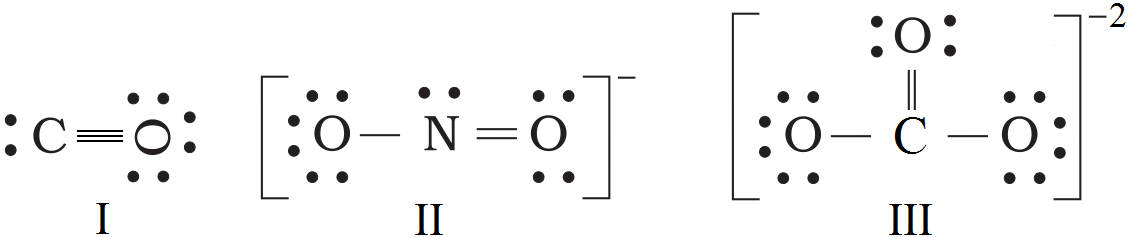
Lewis dot structure of CO2 $\text{NO}_2^-$ and $\text{CO}^{2-}_3$ are I, II and III respectively:

Which of the above structure(s) is/ are wrong?
When an electron drops from a higher energy level to a low energy level, then
The enthalpy change for the reaction, $H_2(g) + C_2H_4(g) \to C_2H_6(g)$ is ......$kcal\, mol^{-1}$ The  bond energies are,  $[e_{H -H}= 103, e_{C-H} = 99, e_{C -C} = 80]$ and $[e_{C = C} = 145\, kcal\, mol^{-1}]$
Gibb’s free enrgy $(G)$ is defined as
An inorganic salt $(A)$ is decomposed on heating to give two products $(B)$ and $(C)$. Compound $(C)$ is a liquid at room temperature and is neutral to litmus while the compound $(B)$ is a colourless neutral gas. Compounds $(A)$, $(B)$ and $(C)$ are
An organic compound contains $C = 36\% $ $H = 6\% $ and rest oxygen. Its Empirical formula is
Given below are two statements: One is labelled as Assertion ($A$) and the other is labelled as Reason ($R$)

Assertion ($A$): Enthalpy of neutralisation of strong monobasic acid with strong monoacidic base is always $-57 \mathrm{~kJ} \mathrm{~mol}^{-1}$

Reason ($R$): Enthalpy of neutralisation is the amount of heat liberated when one mole of $\mathrm{H}^{+}$ions furnished by acid combine with one mole of ${ }^{-} \mathrm{OH}$ ions furnished by base to form one mole of water. In the light of the above statements, choose the correct answer from the options given below.

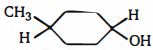
Dehydration of the above compound will give
$A\xrightarrow[{{\text{1%  }}{{\text{H}}_2}{\text{S}}{{\text{O}}_4}}]{{{\text{20%  }}{{\text{H}}_2}{\text{S}}{{\text{O}}_4}}}B\xrightarrow{{{I_2} + NaOH}}{\text{C + }}{{\text{C}}_6}{{\text{H}}_5}{\text{COONa}}$ The reactant $'A'$ is