MCQ
In stationary waves
  • A
    Energy is uniformly distributed
  • Energy is minimum at nodes and maximum at antinodes
  • C
    Energy is maximum at nodes and minimum at antinodes
  • D
    Alternating maximum and minimum energy producing at nodes and antinodes

Answer

Correct option: B.
Energy is minimum at nodes and maximum at antinodes
b
In a stationary wave, node is the point where the amplitude always remains zero at all time and antinode is the point where amplitude will be either minimum or maximum at all time.

When amplitude is at its extremum values the energy of the wave will also be maximum. Hence, it will have maximum energy at antinodes, When amplitude is zero, the energy will also be zero and is the least possible value for energy. Hence, it will have minimum energy at nodes.

Need a full question paper?

Generate a complete, print-ready paper with questions like this in minutes — across 16+ boards, with answer keys.
Start Generating Free

Similar questions

If the Earth losses its gravity, then for a body
In a cylindrical vessel containing liquid of density $\rho $, there are two holes in the side walls at heights of $ h_1$  and $h_2$ respectively such that the range of efflux at the bottom of the vessel is same. The height of a hole, for which the range of efflux would be maximum, will be
Fountains usually seen in gardens are generated by a wide pipe with an enclosure at one end having many small holes. Consider one such fountain which is produced by a pipe of internal diameter $2$ $cm$ in which water flows at a rate $3$ $ms^{^{-1}}$. The enclosure has $100$ holes each of diameter $0.05$ $cm$. The velocity of water coming out of the holes ids ( in $ms^{^{-1}}$) 
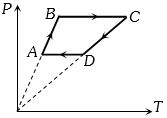
Six moles of an ideal gas perfomrs a cycle shown in figure. If the temperature are $T_A = 600 K, T_B = 800 K, T_C = 2200 K \,and\, T_D = 1200 K$, the work done per cycle is ..... $kJ$
How many times is escape velocity $({V_e})$, of orbital velocity $({V_0})$ for a satellite revolving near earth
The maximum possible acceleration of a train moving on a straight track is $10\  m/s^2$ and maximum possible retardation is $5 \ m/s^2.$ If maximum achievable speed of train is $10\ m/s$ then minimum time in which train can complete a journey of $135\ m$ starting from rest and ending at rest, is.........$s$
A body weighs $144 \,N$ at the surface of earth. When it is taken to a height of $h=3 \,R$, where $R$ is radius of earth, it would weigh .......... $N$
Which of the following is the example of transverse wave
A ball is thrown vertically upwards from the top of a tower at $4.9\,\,m{s^{ - 1}}$. It strikes the pond near the base of the tower after $3 $ seconds. The height of the tower is........$m$
A boy throws a ball with a velocity $u$ at an angle $\theta$ with the horizontal. At the same instant he starts running with uniform velocity to catch the ball before if hits the ground. To achieve this he should run with a velocity of