MCQ
In the above question, the resistance between the square faces is
  • A
    $3 \times 10^{-9}$ ohm 
  • B
    $3 \times 10^{-7}$ ohm
  • C
    $3 \times 10^{-5}$ ohm
  • $3 \times 10^{-3}$ ohm

Answer

Correct option: D.
$3 \times 10^{-3}$ ohm

Need a full question paper?

Generate a complete, print-ready paper with questions like this in minutes — across 16+ boards, with answer keys.
Start Generating Free

Similar questions

The current inside a copper voltameter
In optical instruments, the lenses are used to form images by:
In vacuum the speed of light depends upon(a) Frequency(b) Wave length(c) Velocity of the source of light(d) None of these
   
   
The magnetic induction in the region between the pole faces of an electromagnet is $0.7$ weber$/m^2$. The induced e.m.f. in a straight conductor $10 \ cm$ long, perpendicular to $B$ and moving perpendicular both to magnetic induction and its own length with a velocity $2\ m/\sec$ is
Magnetic flux in a circuit containing a coil of resistance 2Ω changes from 2.0 Wb to 10 Wb in 0.2 sec. The charge passed through the coil in this time is(a) 0.8 C(b) 1.0 C(c) 5.0 C(d) 4.0 C
       
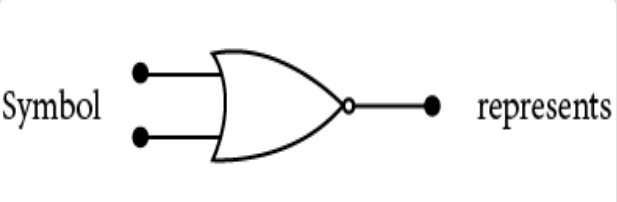
Identify the logic gate in figure.
The resultant of $\overrightarrow{\text{A}}$ and $\overrightarrow{\text{B}}$ makes an angle a with $\overrightarrow{\text{A}}$ and $\beta$ with $\overrightarrow{\text{B}},$
  1. $\alpha<\beta$
  2. $\alpha<\beta \text{ if}\text{ A}<\text{B}$
  3. $\alpha<\beta \text{ if}\text{ A}>\text{B}$
  4. $\alpha<\beta \text{ if}\text{ A}=\text{B}$
Two samples $A$ and $B$ are initially kept in the same state. Sample $A$ is expanded through an adiabatic process and the sample $B$ through an isothermal process. The final volumes of the samples are the same. The final pressures in $A$ and $B$ are $p_A$ and $p_{B }$ respectively.
In the case of constants a and b of  a transistor(a) a = b(b) b < 1   a > 1(c) ab = 1(d) b > 1  a < 1
       
Assertion :   The properties of paramagnetic and ferromagnetic substance are not effected by heating.
Reason     : As temperature rises, the alignment of molecular magnets gradually decreases.(a) If both assertion and reason are true and the reason is the correct explanation of the assertion.(b) If both assertion and reason are true but reason is not the correct explanation of the assertion.(c) If assertion is true but reason is false.(d) If assertion is false but reason is true.