MCQ
In the compound $C{H_2} = CH - C{H_2} - C{H_2} - C \equiv CH,$ the ${C_2} - {C_3}$ bond is of the type
- A$sp - s{p^2}$
- B$s{p^3} - s{p^3}$
- C$sp - s{p^3}$
- ✓$s{p^2} - s{p^3}$
Generate a complete, print-ready paper with questions like this in minutes — across 16+ boards, with answer keys.
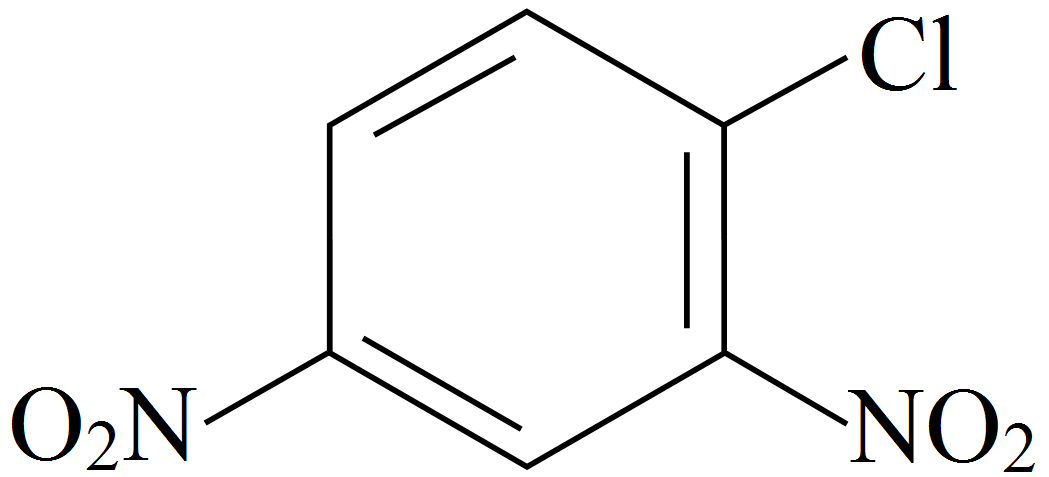
The end product in the above sequence is :
$(I)$ $\begin{array}{*{20}{c}}
{O\,\,\,\,\,\,\,\,\,\,\,\,\,\,\,\,\,\,\,\,} \\
{||\,\,\,\,\,\,\,\,\,\,\,\,\,\,\,\,\,\,\,\,\,} \\
{O - S - {C_6}{H_4} - C{H_3}} \\
{||\,\,\,\,\,\,\,\,\,\,\,\,\,\,\,\,\,\,\,\,\,\,} \\
{O\,\,\,\,\,\,\,\,\,\,\,\,\,\,\,\,\,\,\,\,\,\,}
\end{array}\,$ $(II)$ $\begin{array}{*{20}{c}} {O\,\,\,\,\,\,\,} \\ {||\,\,\,\,\,\,\,} \\ {O - S - {C_6}{H_5}} \\ {||\,\,\,\,\,\,\,} \\ {O\,\,\,\,\,\,\,} \end{array}\,$$(III)$ $N_3$ $(IV)$ $Br$
| List$-II$ | List$-II$ |
| $(a)$ ${PCl}_{5}$ | $(i)$ Square pyramidal |
| $(b)$ ${SF}_{6}$ | $(ii)$ Trigonal planar |
| $(c)$ ${BrF}_{5}$ | $(iii)$ Octahedral |
| $(d)$ ${BF}_{3}$ | $(iv)$ Trigonal bipyramidal |
Choose the correct answer from the options given below.