MCQ
In the electrolysis of NaCl:
- ACl- is oxidised at anode.
- BCl- is reduced at anode.
- CCl- is reduced at cathode.
- DCl- is neither reduced nor oxidised.
Explanation:
Electrolysis of an aqueous solution of table salt (NaCl, or sodium chloride) produces aqueous sodium hydroxide and chlorine, although usually only in minute amounts. NaCl (aq) can be reliably electrolysed to produce hydrogen. Hydrogen gas will be seen to bubble up at the cathode, and chlorine gas will bubble at the anode.
As the electricity from the battery passes through and between the electrodes, the water splits into hydrogen and chlorine gas, which collect as very tiny bubbles around the electrode tips. Hydrogen collects around the cathode and chlorine gas collects around the anode.
Generate a complete, print-ready paper with questions like this in minutes — across 16+ boards, with answer keys.
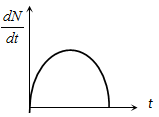
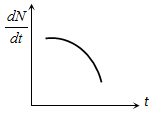
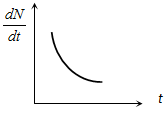
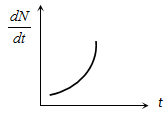
Radioactive element decays to form a stable nuclide, then the rate of decay of reactant  will vary with time (t) as shown in figure
|
(a)
|
(b)
|
(c)
|
(d)
|
An air bubble in sphere having 4 cm diameter appears 1 cm from surface nearest to eye when looked along diameter. If amg = 1.5, the distance of bubble from refracting surface is
|
(a) 1.2 cm |
(b) 3.2 cm |
(c) 2.8 cm |
(d) 1.6 cm |
In Millikan's experiment for the determination of the charge on the electron, the reason for using the oil is
|
(a) It is a lubricant |
(b) Its density is higher |
|
(c) It vapourises easily |
(d) It does not vapourise |
A symmetric double convex lens is cut in two equal parts by a plane containing the principal axis. If the power of the original lens was 4D, the power of a divided lens will be:
Liquid oxygen remains suspended between two pole faces of a magnet because it is
|
(a) Diamagnetic |
(b) Paramagnetic |
(c) Ferromagnetic |
(d) Antiferromagnetic |
The angular dispersion produced by a prism: