MCQ
In the following questions a statement of assertion $(A)$ followed by a statement of reason $(R)$ is given. Choose the correct option out of the choices given below each question.
Assertion $(A)$ : The compound cyclooctane has the following structural formula:
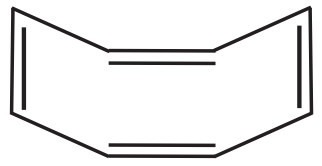
It is cyclic and has conjugated $8\pi-$ electron system but it is not an aromatic compound.
Reason $(R) : (4n + 2) \pi-$ electrons rule does not hold good and ring is not planar.
  • $A$ and $R$ both are correct, and $R$ is the correct explanation of $A.$
  • B
    $A$ and $R$ both are correct, but $R$ is not the correct explanation of $A$.
  • C
    $A$ is true but $R$ is false.
  • D
    $A$ and $R$ both are false.

Answer

Correct option: A.
$A$ and $R$ both are correct, and $R$ is the correct explanation of $A.$
Both $A $ and $R$ are Correct, and $R$ is correct explanation of $A$.
Aromaticity is shown by compounds possessing following characteristics:
Planarity. Complete delocalization of the $\pi$ electrons in the ring.
Presence of $(4n + 2)\pi$ electrons in the ring where n is an integer $(4 = 0, 1, 2, .....)$.
This is often referred to as Huckel Rule.

Need a full question paper?

Generate a complete, print-ready paper with questions like this in minutes — across 16+ boards, with answer keys.

Start Generating Free

Similar questions

Assertion $(A)$ : Some metals like platinum and palladium, can be used as storage media for hydrogen.
Reason $(R)$ : Platinum and palladium can absorb large volumes of hydrogen.
Assertion (A): Electron deficient species that can accept lone pair of electrons known as an electrophile.
Reason (R): $\stackrel{\oplus}{N} H_4$ is an electrophile.
Assertion (A): $C _6 H _5 F$ gives large amount of nitration products than all the other halides
Reason (R): $F$ is most electronegative.
Note : In the following question a statement of Assertion $(A)$ followed by a statement of Reason $(R)$ is given. Choose the correct option out of the choices given below:
Assertion $(A)$ : Excessive use of chlorinated synthetic pesticides causes soil and water pollution.
Reason $(R)$ : Such pesticides are non-biodegradable.
Note : In the following questions a statement of Assertion $(A)$ followed by a statement of Reason $(R)$ is given. Choose the correct option out of the choices given below each question.
Assertion $(A)$ : Silicons are water repelling in nature.
Reason $(R)$ : Silicons are organosilicon polymers, which have $\left(\mathrm{R}_2 \mathrm{SiO}{-}\right)$ as repeating unit.
Assertion (A): Ozonolysis of alkynes are faster than ozonolysis of alkenes.
Reason (R): Reaction proceed by cyclic transition state are faster on alkynes.
Note : In the following questions a statement of Assertion $(A)$ followed by a statement of Reason $(R)$ is given. Choose the correct option out of the choices given below each question.
Assertion $(A)$ : The empirical mass of ethene is half of its molecular mass.
Reason $(R)$ : The empirical formula represents the simplest whole number ratio of various atoms present in a compound.
Assertion (A): Components of a mixture of red and blue inks can be separated by distributing the components between stationary and mobile phases in paper chromatography.
Reason (R): The coloured components of inks migrate at different rates because paper selectively retains different components according to the difference in their partition between the two phases.
Note : In the following questions a statement of Assertion $(A)$ followed by a statement of reason $(R)$ is given. Choose the correct option out of the choices given below each question.
Assertion $(A)$ : Boron has a smaller first ionisation enthalpy than beryllium.
Reason $(R)$ : The penetration of a $2s$ electron to the nucleus is more than the $2p$ electron hence $2p$ electron is more shielded by the inner core of electrons than the $2s$ electrons.
Assertion (A): The energy of quantum of radiation is given by $E = h \nu$.
Reason (R): Quantum in the energy equation signifies the principal quantum number.