MCQ
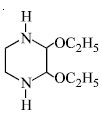
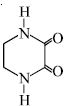
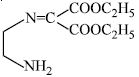
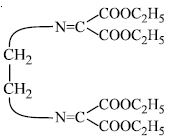
In the given reaction :

$NH_2-CH_2-CH_2-NH_2 +$ $\begin{array}{*{20}{c}}
  {COO{C_2}{H_5}} \\ 
  {|\,\,\,\,\,\,\,\,\,\,\,\,\,\,\,\,\,\,\,\,\,\,\,\,\,} \\ 
  {COO{C_2}{H_5}} 
\end{array}$ $\xrightarrow{{Pyridne}}$ $[X]$

$[X]$ will be :

  • A


  • C

  • D

Answer

Correct option: B.

b

Need a full question paper?

Generate a complete, print-ready paper with questions like this in minutes — across 16+ boards, with answer keys.

Start Generating Free

Similar questions

"Hybridisation of central atom does not always change due to back bonding". This  statement is valid for which of the following compounds ?

$(i)\, {CCl_3}^-$       $(ii)\,CCl_2$     $(iii)\, (SiH_3)_2O$     $(iv)\, N(SiH_3)_3$

At $25\,^oC$, the dissociation constant of $CH_3COOH$ and $NH_4OH$ in aqueous solution are almost the same. The $pH$ of a solution $0.01\, N\, CH_3COOH$ is $4.0$ at $25\,^oC$. The $pH$ of $0.01\, N\, NH_4OH$ solution at the same temperature would be
Volume of $3 \ \mathrm{M} \ \mathrm{NaOH}$ (formula weight $40 \mathrm{~g} \mathrm{~mol}^{-1}$ ) which can be prepared from $84 \mathrm{~g}$ of$\mathrm{NaOH}$ is_____________ $\times 10^{-1} \ \mathrm{dm}^3$.
${K_2}C{r_2}{O_7}$ on heating with aqueous $NaOH$ gives
Radical chain reaction of ethane with chlorine may proceed according to the following mechanism. Which of the following chain propagation step is most likely ?
Azimuthal quantum number for last electron of $Na$ atom is
$\mathop {Xe + {F_2}}\limits_{\left( {1:20} \right)} \xrightarrow{{573\,K,60 - 70\,bar}}A$ 

What is $A$

What is $\Delta n$ for combustion of $ 1 $ mole of benzene, when both the reactants and the products are gas at $298\, K$
An organic compound undergoes first-order decomposition. The time taken for its decomposition to $1 / 8$ and $1 /$ $10$ of its initial concentration are $t _{1 / 8}$ and $t _{1 / 10}$ respectively. What is the value of $\frac{\left[1_{t / 8}\right]}{\left[ t _{1 / 10}\right]} \times 10 ?\left(\log _{10} 2=0.3\right)$
$\begin{matrix}
   C{{H}_{3}}\,\,\,\,\,\,  \\
   |\,\,\,\,\,\,\,\,\,\,\,\,\,\,\,  \\
   C{{H}_{3}}-C-CH-C{{H}_{3}}  \\
   |\,\,\,\,\,\,\,\,\,|\,\,\,\,  \\
   C{{H}_{3}}\,Br\,\,  \\
\end{matrix}\xrightarrow[\Delta ]{EtOH}(A)$

Major product $(A)$ is