MCQ
In the reaction $2{H_2}O \rightleftharpoons {H_3}{O^ + } + O{H^ - }$, water is
- AA weak base
- BA weak acid
- ✓Both a weak acid and a weak base
- DNeither an acid nor a base
Generate a complete, print-ready paper with questions like this in minutes — across 16+ boards, with answer keys.
Assertion $(A) :$ At $10^{\circ} C$, the density of a $5\, M$ solution of $KCl$ [atomic masses of $K$ and $Cl$ are $39$ and $35.5\, g \,mol ^{-1}$ ]. The solution is cooled to $-21^{\circ} C$. The molality of the solution will remain unchanged.
Reason $(R):$ The molality of a solution does not change with temperature as mass remains unaffected with temperature.
In the light of the above statements, choose the correct answer from the options given below
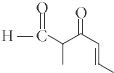
$(i)$ Diastereomers $(ii)$ Geometrical isomers
$(iii)$ Epimers $(iv)$ Anomers
$(v)$ Enantiomers
(Given atomic numbers: $\mathrm{Ti}: 22, \mathrm{~V}: 23, \mathrm{Cr}: 24$, Co: $27$)
$\begin{array}{*{20}{c}}
{\,\,\,\,\,\,\,O} \\
{\,\,\,\,\,\,\,\,||} \\
{C{H_3} - C - H}
\end{array}$ $\mathop {\xrightarrow{{HCN}}}\limits_{\mathop O\limits^\Theta H} (A)\mathop {\xrightarrow{{{H_2}O/{H^ \oplus }}}}\limits_\Delta $ Product
Product will be :