MCQ
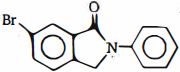
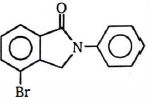
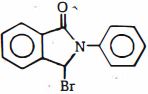
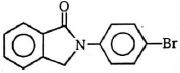
In the reaction given below, the major product formed is
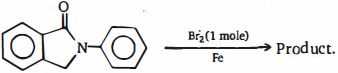
  • A

  • B

  • C


Answer

Correct option: D.

d
$(d)$ More activated ring undergo electrophilic aromatic substitution.

Need a full question paper?

Generate a complete, print-ready paper with questions like this in minutes — across 16+ boards, with answer keys.

Start Generating Free

Similar questions

Ionization enthalpy of an atom is equal to
The rate of reaction, $A + B + C \longrightarrow P$ is given by

$r = \frac{{ - d\left[ A \right]}}{{dt}} = K\,{\left[ A \right]^{\frac{1}{2}}}\,{\left[ B \right]^{\frac{1}{2}}}\,{\left[ C \right]^{\frac{1}{4}}}$

The order of reaction is

Assign $A, B, C, D$ from given type of reaction. $Na_2S + H_2SO_4\, (Conc.) \longrightarrow S \downarrow +SO_2 + Na_2SO_4$
Calculate $\Delta H \,(kJ/mole)$ for the reaction :-
$2FeO_{(s)} + \frac{1}{2}\, O_{2(g)} \to Fe_2O_{3(g)}$

Given                                                                                                   $\Delta H$

$(i)\, Fe_2O_{3(s)}+3C_{(graphite)} \to 2Fe_{(s)} + 3CO_{(g)}$         $492\, kJ/mol$

$(ii)\, FeO_{(s)}+C_{(graphite)} \to Fe_{(s)} + CO_{(g)}$                     $156\, kJ/mol$

$(iii)\, C_{(graphite)} + O_{2(g)} \to CO_{2(g)}$                                   $-393 \,kJ/mol$

$(iv)\, CO_{(g)} + \frac{1}{2}\, O_{2(g)} \to CO_{2(g)}$                            $-283\, kJ/mol$

Which of the following is known as inorganic benzene
The name of complex ion, $[Fe(CN)_6]^{3-}$ is
The frequency of radiation absorbed or emitted when transition occurs between two stationary states with energies $E_1$ (lower) and $E_2$ (higher) is given by 
Which one of the following ions has the highest value of ionic radius
Lead pipes are not suitable for drinking water because
Assertion : At isoelectric point, the amino group does not migrate under the influence of electric field.
Reason : At isoelectric point, amino acid exists as a zwitterion